Allulose Sugar: What It Is and How It Compares to Cane Sugar
Allulose sugar is a rare natural sugar (also called D-psicose) with about 70% the sweetness of table sugar and roughly 0.4 calories per gram. It occurs naturally in small amounts in certain fruits and doesn't significantly impact blood glucose. Noble Cane is developing allulose products for clean-label sweetening.
What is allulose sugar?
Allulose is a rare sugar naturally occurring in wheat, figs, and raisins with the same chemical formula as fructose but a different molecular structure.
Allulose is a monosaccharide classified as a rare sugar because it exists in very small quantities in nature. It has the same chemical formula as fructose (C6H12O6) but differs in how the atoms are arranged, making it what chemists call an epimer of fructose.
You'll find trace amounts of allulose in wheat, figs, raisins, jackfruit, and maple syrup. Commercial allulose is typically produced by converting fructose from corn through an enzymatic process that rearranges the molecular structure.
The FDA recognized allulose as Generally Recognized as Safe (GRAS) and in 2019 excluded it from total and added sugars labeling because of its minimal caloric contribution and negligible effect on blood glucose.
How sweet is allulose compared to regular sugar?
Allulose delivers approximately 70% of the sweetness of sucrose (table sugar) by weight.
When you measure cup for cup, allulose tastes noticeably less sweet than regular cane sugar. Most recipes calling for allulose require about 1.3 times the amount to match the sweetness level of table sugar.
The sweetness profile is clean without the bitter or metallic aftertaste common in some artificial sweeteners and sugar alcohols. Allulose tastes similar to sugar with a slightly less intense sweet peak and a quick finish.
Why does allulose have almost no calories?
Allulose contains roughly 0.4 calories per gram because about 90% of it passes through your digestive system without being metabolized.
Unlike regular sugar at 4 calories per gram, allulose is absorbed in the small intestine but not broken down for energy. Your body excretes approximately 70% through urine and 20% through feces, leaving only about 10% to be metabolized.
This unique metabolic pathway means allulose provides sweetness without the caloric load of sucrose, fructose, or glucose. The FDA permits manufacturers to calculate allulose as 0.4 calories per gram for nutrition labeling purposes.
Does allulose raise blood sugar?
Allulose has a negligible effect on blood glucose and insulin levels in most people, with studies showing minimal to no glycemic response.
Research published in Nutrients and other journals demonstrates that allulose does not significantly increase blood glucose or insulin when consumed in typical amounts. Some studies even suggest it may slightly reduce the glycemic response when consumed with other carbohydrates.
The glycemic index of allulose is effectively zero, compared to table sugar's glycemic index of 65. This makes it a subject of interest for people monitoring their blood sugar, though you should always consult with your healthcare provider about dietary changes.
What are the side effects of allulose?
The most common side effect of allulose is digestive discomfort when consumed in large amounts. Studies indicate that doses above 0.4 grams per kilogram of body weight in a single serving may cause bloating, gas, or loose stools in some people.
For a 150-pound person, that threshold is roughly 27 grams of allulose at once. Most people tolerate smaller amounts without issue. Start with small quantities if you're new to allulose and increase gradually to assess your tolerance.
Unlike sugar alcohols such as erythritol or xylitol, allulose appears to cause fewer digestive issues at equivalent sweetness levels, though individual responses vary.
How do you bake with allulose sugar?
Allulose browns faster than regular sugar and doesn't crystallize, requiring recipe adjustments for temperature and texture in baking.
When you bake with allulose, reduce your oven temperature by 25 degrees Fahrenheit because allulose caramelizes at a lower temperature than sucrose. Without this adjustment, baked goods may brown too quickly on the outside while remaining underdone inside.
Allulose doesn't provide the same structure that sugar does in baking. Sugar crystals contribute to texture, volume, and moisture retention. Allulose remains hygroscopic (attracts moisture) but won't give you the crisp edges on cookies or the same crumb structure in cakes that crystalline sugars deliver.
For most recipes, you'll get better results using allulose in combination with other sweeteners. Consider it for applications where you want sweetness and browning without the full caloric load, such as glazes, sauces, and some quick breads.
How does allulose compare to cane sugar?
Cane sugar and allulose serve different purposes in cooking and baking. Cane sugar provides full sweetness at 4 calories per gram, creates structure in baked goods, and has been used for centuries with well-understood properties. Allulose offers 70% of the sweetness at 0.4 calories per gram with minimal blood glucose impact but requires recipe modifications.
From a processing perspective, traditional cane sugar can be minimally processed to retain minerals, like whole cane jaggery powder, or refined to pure white crystals. Allulose requires enzymatic conversion regardless of the source, making it a more processed ingredient by definition.
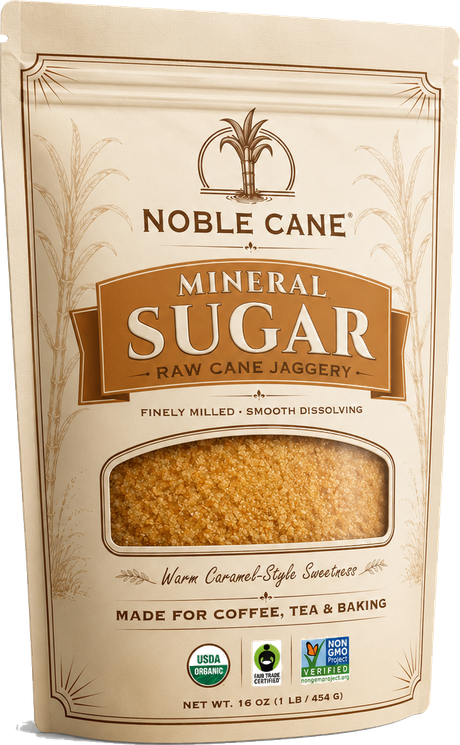
Noble Cane is developing allulose products for those seeking lower-calorie sweetening options while continuing to offer minimally processed cane sugars, including Mineral Sugar (whole cane jaggery powder) and Organic Cane Sugar. Each sweetener has its place depending on your priorities, whether that's traditional flavor and texture or reduced caloric impact.
Quick answers
Is allulose natural or artificial?
Allulose is a natural sugar that occurs in small amounts in figs, raisins, wheat, and maple syrup. Commercial allulose is produced by enzymatically converting fructose from corn, making it naturally derived but processed. It's not an artificial sweetener like aspartame or sucralose.
Can you substitute allulose for sugar in any recipe?
You can substitute allulose in many recipes, but you'll need to adjust amounts (use 1.3 times more) and reduce oven temperature by 25 degrees. Allulose works best in recipes where sugar's structural role isn't critical, such as beverages, sauces, and some quick breads.
Does allulose taste like regular sugar?
Allulose tastes very similar to regular sugar with a clean sweet flavor and no bitter aftertaste. It's about 70% as sweet as table sugar, so you need more of it to achieve the same sweetness level. The taste profile is closer to sugar than most alternative sweeteners.
Is allulose safe for people with diabetes?
Research shows allulose has minimal impact on blood glucose and insulin levels, but people with diabetes should consult their healthcare provider before adding any new sweetener to their diet. Individual responses can vary, and medical guidance is important for managing blood sugar.
Where can I buy allulose sugar?
Allulose is available at many grocery stores, health food stores, and online retailers. Noble Cane is developing allulose products that will be available soon at noblecanesugar.com/shop. You can join the waitlist to be notified when they launch.