Best Sugar for Coffee: How to Choose the Right Sweetener
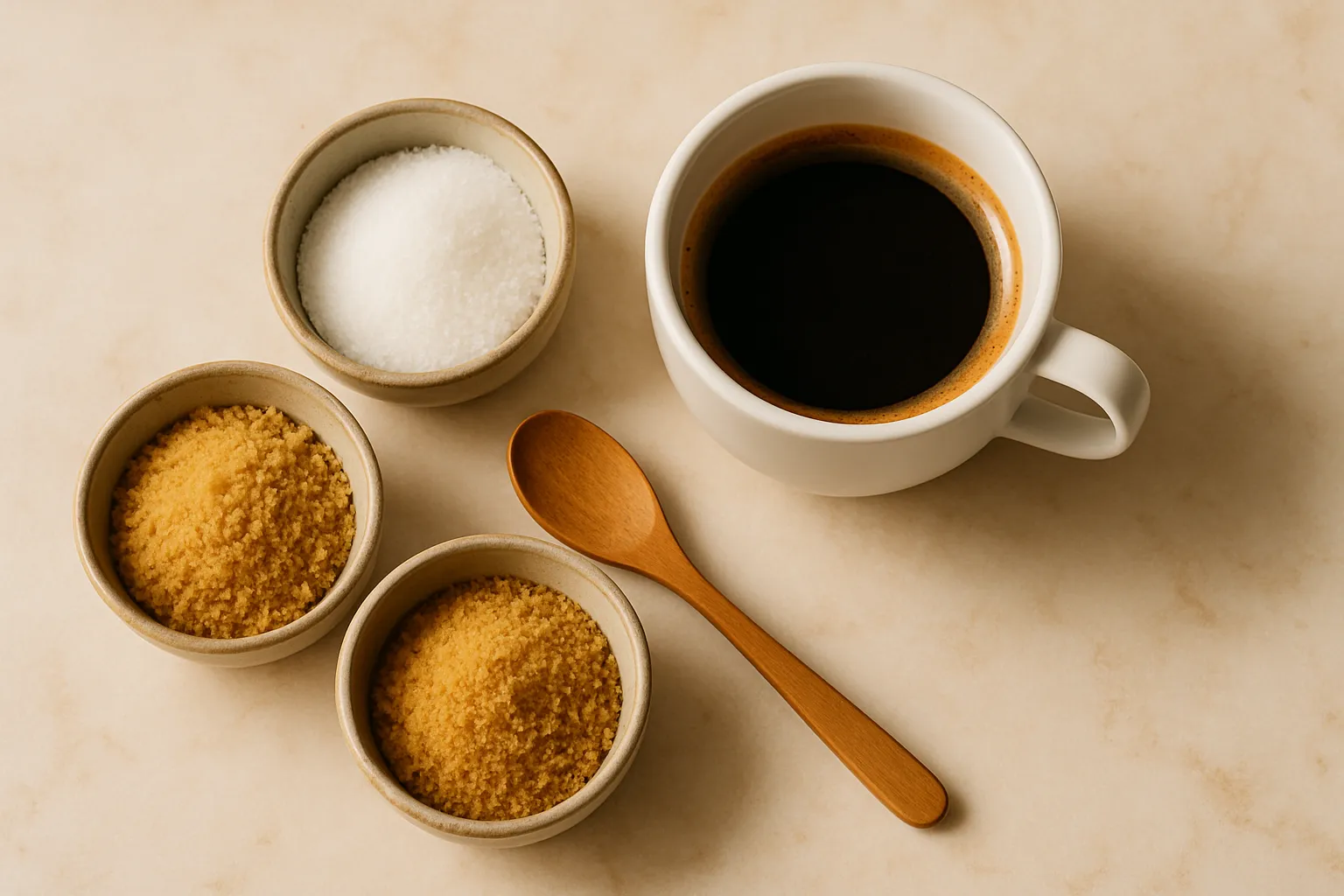
The best sugar for coffee depends on your brew method and taste preferences. Fine white sugar dissolves fastest in hot coffee, while minimally processed options like jaggery powder add mineral complexity. Noble Cane offers both premium organic white sugar and stone-ground Mineral Sugar for different coffee experiences.
What makes a sugar good for coffee?
The best coffee sugar dissolves quickly, complements your brew's flavor profile, and matches your preferred level of sweetness.
Three factors determine how well a sugar works in coffee: crystal size, moisture content, and flavor intensity. Fine crystals dissolve faster than coarse ones, dry sugars store better than moist varieties, and flavor strength affects how much you need.
Hot coffee dissolves sugar easily regardless of type. Cold brew and iced coffee require finer crystals or liquid sweeteners since lower temperatures slow dissolution dramatically.
Your coffee's roast level matters too. Light roasts with bright acidity pair well with neutral white sugar, while dark roasts can handle bolder sweeteners with caramel or molasses notes.
Which sugar dissolves fastest in coffee?
Extra-fine white sugar dissolves fastest in both hot and cold coffee due to its small crystal size and lack of moisture-retaining molasses.
Crystal size directly impacts dissolution speed. White granulated sugar typically measures 0.3 to 0.5 mm per crystal, while extra-fine varieties go down to 0.1 to 0.2 mm. This difference cuts dissolution time by 60 to 70 percent.
For cold coffee, superfine or caster sugar eliminates the gritty undissolved feeling completely. You can make your own by pulsing regular white sugar in a food processor for 30 seconds.
Turbinado and demerara have larger crystals (0.8 to 2 mm) that take significantly longer to dissolve. They work fine in hot coffee if you stir thoroughly but struggle in cold applications.
Does brown sugar taste good in coffee?
Brown sugar adds subtle caramel and toffee notes that complement medium and dark roasts. The molasses content (3.5 percent in light brown, 6.5 percent in dark brown) brings warmth and complexity to your cup.
The downside is texture. Brown sugar clumps easily due to its moisture content, and those clumps take longer to dissolve than white sugar. You'll need to stir more vigorously.
Keep in mind that brown sugar is refined white sugar with molasses added back during processing. If you want the molasses flavor with more mineral content, unrefined options like muscovado or jaggery powder offer deeper complexity.
What is the best sugar for coffee if you want minerals?
Unrefined whole cane sugars like jaggery powder retain the most minerals from sugarcane, including iron, potassium, magnesium, and calcium that are removed during conventional refining.
Standard white sugar contains virtually no minerals since refining strips them away. Brown sugar has trace amounts from added molasses. Unrefined sugars keep the original mineral profile because the molasses never gets separated.
Jaggery powder, muscovado, and panela contain 40 to 100 times more minerals than white sugar per serving. These aren't health foods, but if you're sweetening coffee anyway, minimally processed options retain more of what the sugarcane originally contained.
The tradeoff is bolder flavor. Whole cane sugars bring pronounced caramel, toffee, and sometimes earthy notes that transform your coffee's taste. Start with half your usual amount since the flavor intensity means you need less.
How does best sugar for coffee differ by brewing method?
Hot drip coffee and pour-overs work with any sugar type since the high temperature (195 to 205°F) dissolves crystals quickly. White sugar keeps the coffee's original flavor profile clean, while unrefined options add their own character.
Cold brew demands fine crystals or requires making a simple syrup first. Many people batch-prepare sugar syrup (1:1 sugar to water ratio) specifically for cold coffee to avoid undissolved grains.
Espresso-based drinks like lattes and cappuccinos have less liquid volume, so you need less sugar overall. The milk's natural sweetness (about 5 percent lactose) means you can often use half your normal amount. Fine sugar works best here since you're stirring into a smaller, denser drink.
What about sugar alternatives for coffee?
Honey and maple syrup dissolve easily but add distinct flavors that can overwhelm delicate coffee notes. Both work well in coffee-forward drinks where their taste is intentional, like a honey latte or maple cold brew.
Sugar alcohols like erythritol provide sweetness with minimal calories but often leave a cooling aftertaste that some find unpleasant in coffee. Allulose, a rare sugar with about 70 percent the sweetness of table sugar and roughly 0.4 calories per gram, offers a closer match to sugar's clean taste.
Artificial sweeteners vary widely. Sucralose and stevia can taste bitter or metallic in coffee, especially in black coffee where there's nothing to mask the aftertaste. If you prefer these options, experiment with different brands since formulations affect flavor significantly.
Which Noble Cane sugar is best for your coffee?
Noble Cane offers two distinct options depending on what you want from your coffee. The Organic Cane Sugar is USDA Certified Organic extra-fine white sugar that dissolves instantly and keeps your coffee's flavor exactly as the roaster intended. No bleaching agents, no additives, just pure cane sugar ground to a fine texture that works perfectly in hot or iced coffee.
Noble Cane Mineral Sugar is stone-ground whole cane jaggery powder that brings mineral complexity along with natural caramel notes. It retains iron, potassium, and magnesium that conventional refining removes. Use it when you want your coffee to taste richer and slightly more complex, especially with darker roasts.
Both come in resealable pouches and dissolve far better than commodity sugar. The Mineral Sugar is particularly good for people transitioning from flavored coffee creamers since it adds its own dimension without artificial flavoring. Find both at noblecanesugar.com/shop.
Quick answers
What is the healthiest sugar to put in coffee?
No sugar is healthy, but minimally processed options like jaggery powder or muscovado retain more minerals than refined white sugar. The difference is mineral content and processing method, not calories, which remain comparable across all cane sugars at about 15-16 calories per teaspoon.
How much sugar should you put in coffee?
Most people use 1 to 2 teaspoons (4 to 8 grams) per 8-ounce cup. Start with less if using unrefined sugars like jaggery since their intense flavor means you need less to achieve the same perceived sweetness. Adjust based on your coffee's roast level and natural sweetness.
Why doesn't sugar dissolve in my iced coffee?
Cold temperatures slow dissolution dramatically. Use extra-fine or superfine sugar for iced coffee, or make simple syrup (equal parts sugar and hot water, cooled) that mixes instantly into cold beverages. Regular granulated sugar struggles below 70°F.
Is turbinado sugar better for coffee than white sugar?
Turbinado is partially refined with large crystals and a light molasses coating. It adds subtle caramel notes but takes longer to dissolve than white sugar. Neither is better, they're different: turbinado for added flavor complexity, white sugar for clean sweetness that highlights the coffee itself.
Can you taste the difference between sugar types in coffee?
Yes, especially between white sugar and unrefined varieties. White sugar adds pure sweetness without flavor. Brown sugar, jaggery, muscovado, and similar options bring caramel, toffee, or molasses notes that change your coffee's taste profile noticeably. The difference is most apparent in black coffee.
Keep reading
Jaggery vs. Brown Sugar: What's the Difference?
Jaggery is unrefined cane sugar that retains its natural minerals and molasses. Brown sugar is refined white sugar with molasses added back in after processing. They look similar, but jaggery keeps iron, potassium, and magnesium that brown sugar loses during refining.
Read more →What Is Jaggery?
Jaggery is a traditional unrefined sugar made by evaporating raw cane juice without removing the molasses or minerals. The result is a golden-brown sweetener that retains iron, potassium, magnesium, and other trace minerals lost during conventional sugar refining. Noble Cane Mineral Sugar is stone-ground jaggery in a fine powder form.
Read more →