Demerara Sugar: What It Is and How to Use It
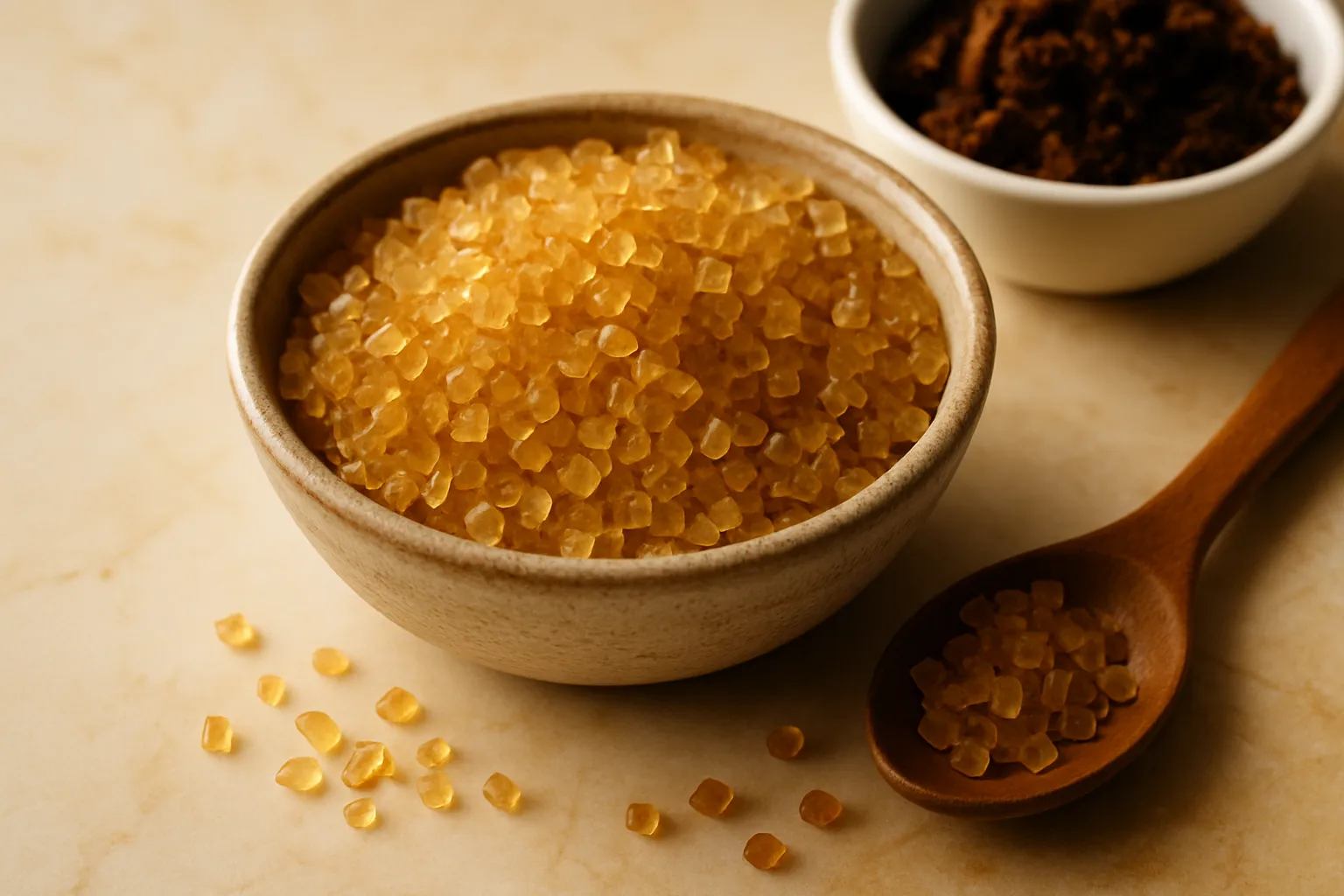
Demerara sugar is a partially refined cane sugar with large, crunchy golden crystals and a subtle molasses flavor. Named after the Demerara region in Guyana, it retains trace minerals through minimal processing. Noble Cane offers both minimally processed Mineral Sugar and Organic Cane Sugar for different baking needs.
What is demerara sugar?
Demerara sugar is a partially refined cane sugar characterized by large, golden crystals with a light molasses coating.
Demerara sugar is a partially refined cane sugar with distinctively large, crunchy golden crystals. It's named after the Demerara region of Guyana, where this style of sugar originated in the 1800s.
During processing, demerara undergoes one crystallization after juice extraction. The crystals retain a thin coating of molasses, which gives them their amber color and subtle toffee flavor. Most demerara is made from sugarcane, though some producers use beet sugar.
The crystal size typically ranges from 1 to 4 millimeters, significantly larger than granulated white sugar. This coarse texture makes demerara particularly valued for finishing baked goods and sweetening hot beverages where you want a crunchy element.
What's the difference between demerara and turbinado sugar?
Demerara and turbinado are nearly identical. Both are partially refined cane sugars with large crystals and a light molasses coat. The main difference is geographic and branding, turbinado is the term trademarked by Sugar in the Raw, while demerara refers to the traditional style from Guyana.
In practice, you can substitute them 1:1 in any recipe. Demerara crystals may be slightly larger and have a marginally deeper color, but the flavor difference is minimal. Both contain trace amounts of minerals like calcium and iron, though not in nutritionally significant quantities.
If a recipe specifically calls for one or the other, it's usually about crystal size for texture rather than flavor. Either works well for topping muffins, stirring into coffee, or adding crunch to cookies.
How does demerara compare to brown sugar?
Brown sugar is refined white sugar with molasses added back, while demerara is partially refined sugar that retains its original molasses coating.
The processing makes all the difference. Brown sugar starts as fully refined white sugar, then manufacturers add molasses back in controlled amounts to create light or dark varieties. Demerara, by contrast, is only partially refined, so it keeps some of its original molasses.
Brown sugar is soft, moist, and fine-grained because of the added molasses. Demerara is dry, crunchy, and coarse. Brown sugar has a stronger molasses flavor, while demerara tastes more subtle with gentle caramel notes.
You can't always substitute them directly. Brown sugar's moisture content affects baking chemistry, making cookies chewier and cakes more tender. Demerara works better as a topping or in recipes where you want texture, like streusel or the crust on crème brûlée.
What is demerara sugar best used for?
Demerara excels anywhere you want crunchy texture or a sparkly finish. Sprinkle it on top of muffins, scones, or quick breads before baking. The large crystals hold their shape in the oven and create an appealing crackly top that stays distinct.
It's also excellent in hot drinks. The crystals dissolve slowly in tea or coffee, and some people enjoy the ritual of stirring. Bartenders use it for rum cocktails and Old Fashioneds, where the subtle molasses note complements brown spirits.
For baking, demerara works in shortbread cookies, oatmeal cookie toppings, and pie crust edges. You can use it in place of granulated sugar in most recipes, though the larger crystals take longer to dissolve. In creamed butter-and-sugar mixtures, the texture may stay slightly gritty, which some bakers prefer for added dimension.
Does demerara sugar have nutritional benefits?
Demerara contains trace minerals like calcium, iron, and potassium from the molasses coating, but the amounts are nutritionally insignificant. A teaspoon might have 1 to 2 percent of your daily iron needs. You'd need to consume unrealistic quantities to get meaningful mineral intake.
Calorie-wise, demerara is identical to white granulated sugar, about 16 calories per teaspoon or 4 grams. The sucrose content is nearly the same, typically 97 to 99 percent, so it affects blood glucose similarly to regular sugar.
The advantage of demerara isn't nutrition, it's minimal processing and the absence of chemical whitening agents. If you want more mineral retention, look for fully unrefined options like muscovado or whole cane jaggery powder, which keep all the original molasses and minerals intact.
Where can you buy demerara sugar?
Most grocery stores stock demerara in the baking aisle, often near specialty sugars or in the organic section. Common brands include Billington's, India Tree, and Wholesome. You'll also find it at natural food stores, coffee shops that sell retail products, and online retailers.
Expect to pay more than granulated white sugar. Demerara typically costs two to three times as much per pound because of the specialized processing and smaller production scale. A one-pound bag usually runs between 4 and 8 dollars depending on the brand and whether it's organic.
If you're exploring minimally processed sugars, Noble Cane Mineral Sugar offers a more complete alternative. It's stone-ground whole cane jaggery powder that retains iron, potassium, and magnesium because the molasses and minerals are never removed. You can find it at noblecanesugar.com/shop alongside Noble Cane Organic Cane Sugar, a USDA Certified Organic extra-fine white sugar processed without bleaching agents.
Can you make demerara sugar at home?
You can't truly replicate demerara at home because it requires partial refining and controlled crystallization from cane juice. However, you can make a textural substitute by mixing white granulated sugar with a small amount of molasses.
Combine 1 cup of coarse white sugar with 1 to 2 teaspoons of molasses. Toss thoroughly until the crystals are evenly coated and let it dry on a baking sheet for a few hours. This gives you a similar color and a hint of molasses flavor, though the crystals won't be as large or uniform as real demerara.
For a closer texture match, start with turbinado or Sugar in the Raw if you have it, and add just a touch more molasses. Keep in mind that homemade versions won't have the same drying and handling properties, so they work better for topping than for precise baking formulas.
Quick answers
Is demerara sugar the same as raw sugar?
Demerara is often labeled as raw sugar, but it's technically partially refined. True unrefined sugars like muscovado or jaggery retain all their original molasses and minerals, while demerara undergoes one stage of refining that removes most molasses, leaving only a light coating on the crystals.
Can I substitute demerara sugar for white sugar in baking?
Yes, you can substitute demerara 1:1 for white sugar in most recipes, but expect slight differences. The larger crystals take longer to dissolve and may create a grittier texture in creamed mixtures. The subtle molasses flavor also adds a hint of caramel that works well in cookies, quick breads, and streusel toppings.
Why is demerara sugar more expensive than regular sugar?
Demerara costs more because it requires specialized processing to create uniform large crystals and controlled molasses retention. Production volumes are smaller than commodity white sugar, and many demerara brands source from specific regions or use organic cane, which increases costs.
Does demerara sugar expire?
Demerara sugar doesn't expire if stored properly. Keep it in an airtight container in a cool, dry place to prevent clumping and moisture absorption. It may harden over time if exposed to humidity, but you can break up clumps or pulse briefly in a food processor to restore texture.
What does demerara sugar taste like?
Demerara has a subtle toffee or caramel flavor with mild molasses notes. It's less intense than brown sugar or muscovado, tasting closer to white sugar with a gentle warmth. The flavor becomes more pronounced when the crystals are sprinkled on top of baked goods and caramelize in the oven.
Keep reading
Turbinado Sugar: What It Is and How to Use It
Turbinado sugar is a partially refined cane sugar with large, golden crystals and a subtle molasses flavor. It retains a thin coating of molasses after processing. Noble Cane offers minimally processed alternatives including Mineral Sugar, a stone-ground jaggery powder that retains more natural minerals.
Read more →Muscovado Sugar: The Unrefined Molasses-Rich Sweetener
Muscovado sugar is an unrefined cane sugar where the molasses is never removed during processing, giving it a sticky texture, dark color, and intense molasses flavor. Noble Cane Mineral Sugar offers similar mineral retention and deep flavor in a fine, pourable powder form.
Read more →