Muscovado Sugar: The Unrefined Molasses-Rich Sweetener
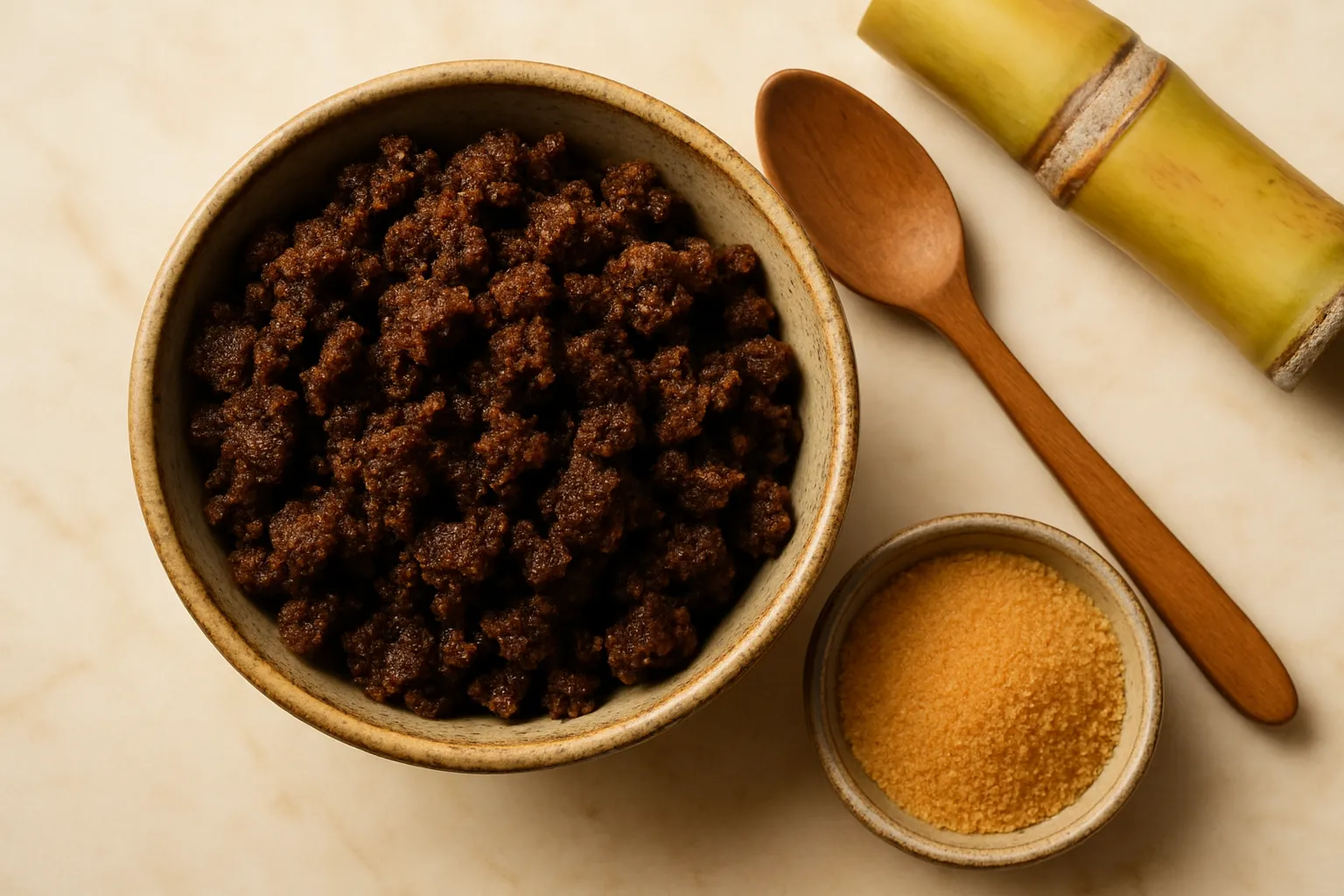
Muscovado sugar is an unrefined cane sugar where the molasses is never removed during processing, giving it a sticky texture, dark color, and intense molasses flavor. Noble Cane Mineral Sugar offers similar mineral retention and deep flavor in a fine, pourable powder form.
What is muscovado sugar?
Muscovado sugar is an unrefined cane sugar that retains all of its natural molasses, giving it a wet, sandy texture and intense caramel flavor.
Muscovado sugar is made by extracting juice from sugar cane, boiling it to concentrate, and allowing it to crystallize without removing the molasses. The result is a dark, sticky sugar with moisture content ranging from 3% to 8%, much higher than refined sugars.
The name comes from the Spanish word "mascabado," meaning unrefined. Traditional muscovado production methods preserve minerals like potassium, magnesium, calcium, and iron that are stripped away during conventional sugar refining.
You'll find two main varieties: light muscovado with a milder toffee flavor, and dark muscovado with a stronger, almost smoky molasses taste. Both have a distinctive sticky quality that clumps easily and requires breaking up before measuring.
How does muscovado sugar differ from brown sugar?
Brown sugar is refined white sugar with molasses added back, while muscovado sugar is never refined and retains its original molasses content.
The key difference lies in the production process. Brown sugar starts as fully refined white sugar, then a controlled amount of molasses is added back to create color and flavor. Muscovado never goes through that refining and recombining process.
This means muscovado contains more minerals and a more complex flavor profile. It has about 1% to 2% molasses by weight compared to brown sugar's 3.5% to 6.5%, but muscovado's molasses is never separated from the crystals, preserving more of the original mineral content.
Texture also sets them apart. Brown sugar is relatively dry and granular, while muscovado is sticky and wet. You can't always substitute them one-for-one in recipes because of these moisture differences.
What does muscovado sugar taste like?
Muscovado sugar delivers an intense molasses flavor with notes of toffee, caramel, and a subtle bitterness that adds complexity. Dark muscovado has a more pronounced taste, almost reminiscent of burnt sugar or espresso, while light muscovado is gentler with butterscotch undertones.
The flavor is richer and more nuanced than brown sugar because the molasses is integral to the sugar crystals rather than coated on. This makes muscovado particularly valuable in recipes where you want depth and complexity, not background sweetness.
What is muscovado sugar used for?
Muscovado excels in baked goods where you want moisture and deep flavor. It's ideal for gingerbread, spice cakes, sticky toffee pudding, chocolate cookies, and barbecue sauces. The high molasses content keeps baked goods moist and adds a rich, caramelized depth.
In savory cooking, muscovado works well in marinades, glazes, and rubs for grilled meats. The complex flavor pairs beautifully with ginger, cinnamon, coffee, and dark chocolate. Many bakers use it in recipes adapted from British and Caribbean cuisines where muscovado is traditional.
The sticky texture means you'll need to pack it firmly when measuring, similar to brown sugar. Some recipes benefit from dissolving it in liquid first to ensure even distribution throughout the batter or sauce.
Can you substitute muscovado sugar in recipes?
You can substitute dark brown sugar for muscovado in most recipes at a 1:1 ratio, though you'll lose some flavor complexity and mineral content. The texture difference is minimal enough that most baked goods will turn out fine.
If you're replacing white or light brown sugar with muscovado, reduce the liquid in your recipe slightly or add a bit more flour. Muscovado's higher moisture content can affect texture, especially in cookies and pastries where precise moisture ratios matter.
Going the other direction, you can replace muscovado with a mixture of light brown sugar and a tablespoon of molasses per cup. This approximates the flavor profile, though it won't have the same mineral content or texture.
How does muscovado compare to other unrefined sugars?
Muscovado sits in the unrefined sugar family alongside jaggery, panela, and piloncillo. All are made by boiling cane juice without separating the molasses, but they differ in texture and regional production methods.
Jaggery, common in South Asian cooking, is typically formed into hard blocks and has a drier, more granular texture when ground. Panela and piloncillo are Latin American versions, also sold in solid cones or blocks. Muscovado is unique in being sold as a moist, loose sugar rather than a molded form.
Turbinado and demerara are partially refined, meaning some molasses is removed, then a light coating remains on large crystals. They're drier and less flavorful than muscovado. Noble Cane Mineral Sugar offers another option: stone-ground whole cane jaggery powder that retains minerals and deep flavor but flows easily without the sticky texture of traditional muscovado.
Where can you buy muscovado sugar?
Muscovado sugar is available at specialty grocery stores, natural food markets, and online retailers. Brands like India Tree and Billington's are widely distributed in the United States. Expect to pay between 8 and 15 dollars per pound, significantly more than conventional brown sugar.
Store muscovado in an airtight container to prevent it from drying out or hardening. If it does harden, place a damp paper towel in the container overnight or microwave it briefly with a cup of water nearby to restore moisture.
If you're looking for similar mineral retention and deep molasses flavor in a more user-friendly form, Noble Cane Mineral Sugar provides whole cane goodness in a fine powder that measures and pours easily. It's available at noblecanesugar.com/shop with the convenience of modern packaging and the integrity of traditional minimally processed cane sugar.
Quick answers
Is muscovado sugar the same as brown sugar?
No, muscovado sugar is unrefined with molasses never removed, while brown sugar is refined white sugar with molasses added back. Muscovado has more minerals, a stronger flavor, and a wetter texture than brown sugar.
Does muscovado sugar have more minerals than white sugar?
Yes, muscovado retains minerals like potassium, magnesium, calcium, and iron because it's never refined. White sugar has these minerals stripped away during processing. However, the amounts are small and sugar shouldn't be considered a mineral source.
Can I use muscovado sugar instead of white sugar?
You can, but the results will be different. Muscovado will add molasses flavor, darker color, and extra moisture to your recipes. It works best as a white sugar substitute in recipes where those qualities are welcome, like spice cakes or cookies.
Why is muscovado sugar so sticky?
Muscovado contains 3% to 8% moisture from the molasses that was never removed during processing. This high moisture content creates its characteristic sticky, clumpy texture that requires breaking up before use.
How long does muscovado sugar last?
Muscovado sugar lasts indefinitely when stored in an airtight container in a cool, dry place. It may harden over time but can be softened by adding a damp paper towel to the container overnight or briefly microwaving with water nearby.
Keep reading
Jaggery vs. Brown Sugar: What's the Difference?
Jaggery is unrefined cane sugar that retains its natural minerals and molasses. Brown sugar is refined white sugar with molasses added back in after processing. They look similar, but jaggery keeps iron, potassium, and magnesium that brown sugar loses during refining.
Read more →What Is Jaggery?
Jaggery is a traditional unrefined sugar made by evaporating raw cane juice without removing the molasses or minerals. The result is a golden-brown sweetener that retains iron, potassium, magnesium, and other trace minerals lost during conventional sugar refining. Noble Cane Mineral Sugar is stone-ground jaggery in a fine powder form.
Read more →Turbinado Sugar: What It Is and How to Use It
Turbinado sugar is a partially refined cane sugar with large, golden crystals and a subtle molasses flavor. It retains a thin coating of molasses after processing. Noble Cane offers minimally processed alternatives including Mineral Sugar, a stone-ground jaggery powder that retains more natural minerals.
Read more →