Demerara Sugar vs Brown Sugar: What's the Difference?
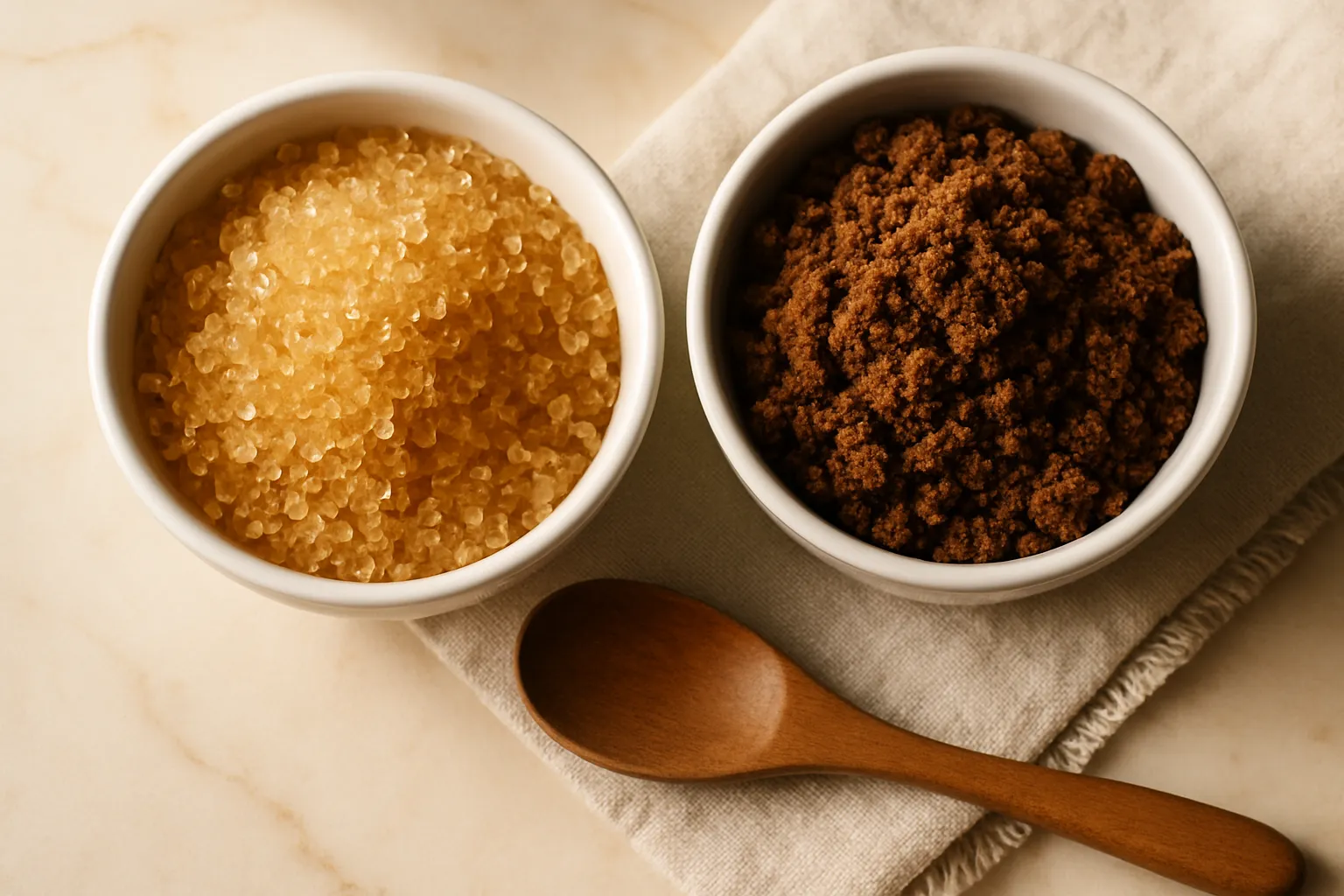
Demerara sugar is partially refined with large golden crystals and a subtle molasses flavor, while brown sugar is fully refined white sugar with molasses added back. Demerara has a crunchy texture and works for toppings, while brown sugar is soft and ideal for baking. Noble Cane offers minimally processed alternatives.
What is the main difference between demerara and brown sugar?
Demerara sugar is partially refined during initial processing, while brown sugar is fully refined white sugar with molasses added back in.
The fundamental difference lies in how each sugar is made. Demerara undergoes one round of refining that removes some molasses, leaving large golden crystals with a light molasses coating. Brown sugar goes through full refining to become white sugar, then has molasses blended back in to create its signature color and moisture.
This processing difference creates distinct textures and flavors. Demerara forms hard, crunchy crystals about 1 to 2 mm in size. Brown sugar stays soft and moist with fine crystals that clump together because of the added molasses.
You can see the difference at a glance. Demerara has individual amber crystals that sparkle and stay separate. Brown sugar looks darker and sticks together in soft clumps.
How does the flavor differ between demerara sugar and brown sugar?
Demerara sugar has a subtle toffee flavor with about 1 to 2% molasses content, while brown sugar tastes more intensely of molasses at 3.5% for light brown and 6.5% for dark brown.
Demerara offers a delicate caramel or toffee note that enhances without overwhelming. The light molasses coating adds complexity to coffee, tea, or baked goods without making them taste distinctly of molasses. It's the most subtle of the golden sugars.
Brown sugar delivers a more pronounced molasses flavor that you'll notice immediately. Light brown sugar has a mild but clear molasses taste. Dark brown sugar takes it further with a deep, almost treacle-like flavor that can dominate delicate recipes.
The molasses percentage matters for your results. If you want a hint of depth, use demerara. If you want that classic soft-baked cookie flavor with noticeable molasses character, brown sugar is your choice.
Can you substitute demerara sugar for brown sugar in recipes?
You can substitute them in some cases, but expect different results. The texture difference means demerara won't provide the same moisture or softness that brown sugar contributes to cookies, cakes, and quick breads. Your baked goods may turn out drier and less tender.
The best substitution is in recipes where texture isn't critical. Use demerara in place of brown sugar for glazes, rubs, or sauces where you can dissolve the larger crystals. For most baking recipes, the substitution works better going the other direction: brown sugar in place of demerara.
If you need to substitute demerara for brown sugar in baking, add a tablespoon of molasses per cup of demerara and consider increasing liquid slightly. This won't perfectly replicate the fine texture, but it gets closer to the moisture and flavor profile.
Which sugar is better for baking, demerara or brown sugar?
Brown sugar wins for most baking applications. Its fine crystals dissolve easily and distribute evenly through batters and doughs. The added moisture from molasses keeps cookies soft, makes cakes tender, and helps create that chewy texture in brownies and blondies.
Demerara excels as a finishing sugar rather than an ingredient. Sprinkle it on muffin tops, scones, or pie crusts before baking for a crunchy, sparkly topping that adds textural contrast. The large crystals hold their shape in the oven instead of dissolving completely.
For recipes that specifically call for demerara, like certain British biscuits or crisps, the coarse texture is part of the intended result. Don't swap in brown sugar for these recipes or you'll lose the characteristic crunch.
Does demerara sugar have more minerals than brown sugar?
Demerara retains slightly more naturally occurring minerals than brown sugar because it undergoes less refining, but both contain minimal amounts compared to fully unrefined whole cane sugars.
Demerara keeps trace amounts of minerals like calcium, iron, and potassium from the original cane juice. We're talking about roughly 20 to 80 mg of minerals per 100 grams, depending on the specific processing. Brown sugar has similar trace amounts from the molasses that's added back, typically 30 to 100 mg per 100 grams.
Neither option retains minerals in significant quantities because both go through refining. The centrifuging and crystallization processes remove most of the mineral-rich molasses. What remains is a tiny fraction of what was in the original cane.
For meaningful mineral retention, you need truly unrefined options. Noble Cane Mineral Sugar is stone-ground whole cane jaggery powder that never undergoes refining, keeping iron, potassium, and magnesium intact. If mineral content matters to you, that's where the real difference shows up.
What are the best uses for demerara sugar vs brown sugar?
Use demerara when you want crunch and sparkle. It's perfect for sprinkling on oatmeal, yogurt, or fresh fruit. Top hot cereals, baked goods, or crème brûlée (though traditional recipes call for white sugar, demerara adds toffee notes). Stir it into hot coffee or tea where the crystals dissolve slowly and add subtle complexity.
Brown sugar belongs in recipes where moisture and even distribution matter. It's essential for chocolate chip cookies, oatmeal cookies, barbecue sauce, baked beans, and spice cakes. Use it in marinades and rubs where it melts into the other ingredients and caramelizes beautifully.
Both work in different drink applications. Demerara is traditional in British tea and adds texture to cocktail rims. Brown sugar makes excellent simple syrups for cocktails and iced drinks because it dissolves completely and adds that molasses character without grittiness.
How do demerara and brown sugar compare to whole cane options?
Both demerara and brown sugar sit in the middle of the refinement spectrum. They offer more character than white sugar but still go through industrial processing that removes most of the original cane components. Whole cane sugars like jaggery, panela, and muscovado take a different approach entirely.
Whole cane options never separate the molasses from the sugar crystals. The entire cane juice is boiled down and dried, keeping all the minerals, flavor compounds, and color intact. This creates deeper flavors and actual nutritional differences, though still in modest amounts per serving.
Noble Cane Mineral Sugar represents this category with stone-ground jaggery powder. It has a complex flavor that goes beyond simple sweetness, with notes of caramel, toffee, and even slight fruitiness. Use it as you would brown sugar in baking, or anywhere you want genuine whole cane character without the processing compromises.
Quick answers
Is demerara sugar healthier than brown sugar?
Neither is significantly healthier. Both provide about 4 calories per gram with minimal mineral content. Demerara retains slightly more naturally occurring minerals due to less processing, but the amounts are too small to make a nutritional difference. Choose based on texture and flavor needs, not health benefits.
Why is demerara sugar more expensive than brown sugar?
Demerara costs more because it requires specific growing conditions (traditionally from Guyana), specialized processing to create the large crystals, and lower production volumes. Brown sugar is mass-produced by simply adding molasses back to refined white sugar, making it cheaper and more widely available.
Does demerara sugar dissolve as easily as brown sugar?
No, demerara takes longer to dissolve due to its large crystal size. Brown sugar dissolves quickly because of its fine texture and moisture content. For cold applications or quick mixing, brown sugar works better. For hot liquids or recipes with time to dissolve, demerara works fine.
Can I make demerara sugar at home from white sugar?
You cannot replicate true demerara at home. While you can mix white sugar with molasses to approximate brown sugar, demerara's large crystal structure comes from specific crystallization processes during manufacturing. The closest home substitute is mixing white sugar with a small amount of molasses, but it won't have the same texture.
What is turbinado sugar and how does it compare to demerara?
Turbinado and demerara are very similar, both partially refined with large golden crystals. Turbinado crystals are slightly lighter in color and may be marginally smaller. They work interchangeably in most recipes. The main difference is geographic origin and minor variations in processing methods.