Jaggery Powder: What It Is and How to Use It
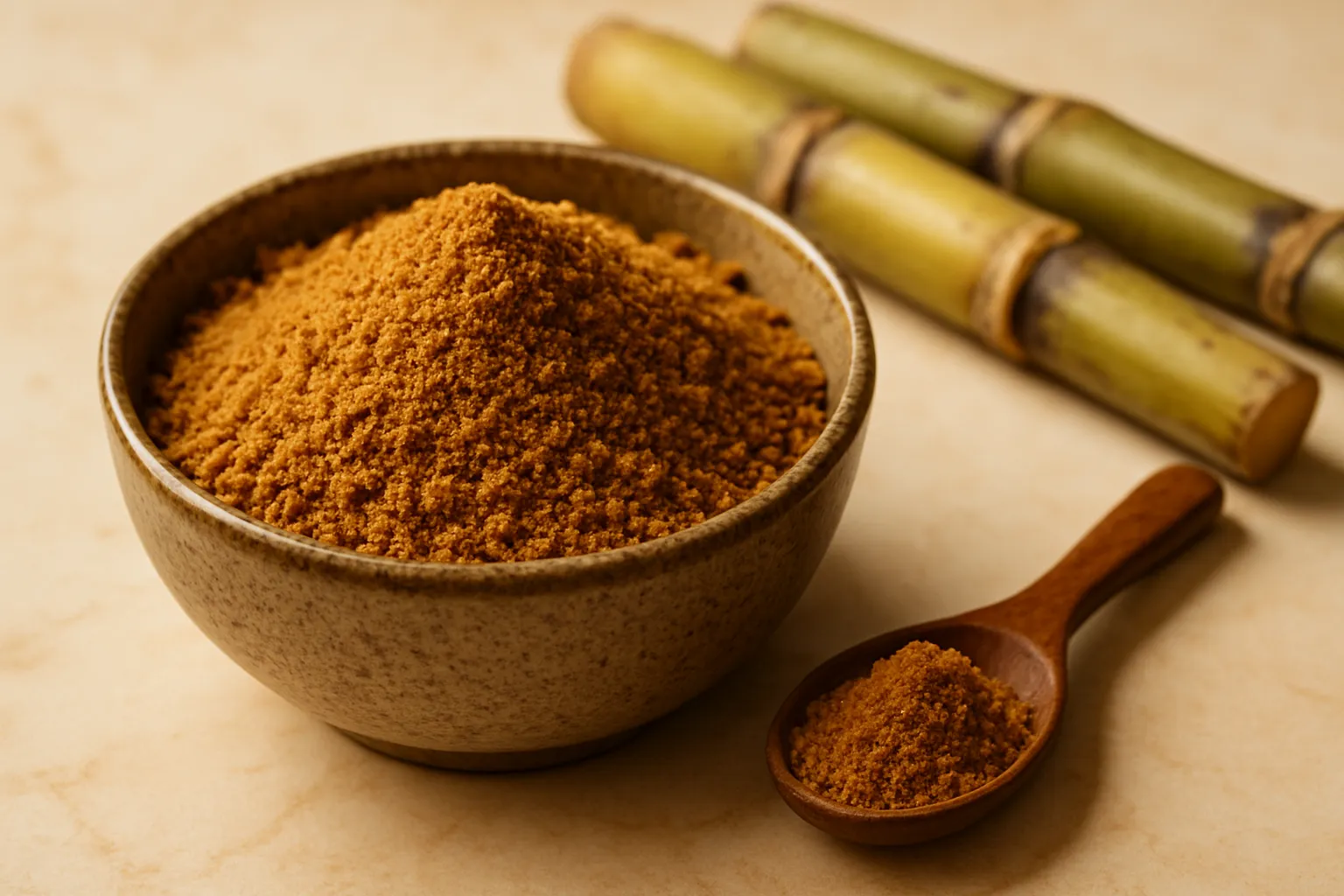
Jaggery powder is stone-ground whole cane sugar with all its natural molasses and minerals intact. Unlike brown sugar, which is refined white sugar with molasses added back, jaggery is never refined. Noble Cane Mineral Sugar is a premium stone-ground jaggery powder that retains iron, potassium, and magnesium.
What is jaggery powder?
Jaggery powder is unrefined cane sugar made by evaporating sugarcane juice and grinding it into powder form without removing any molasses or minerals.
Jaggery powder is whole cane sugar that has been stone-ground into a fine powder. It starts as fresh sugarcane juice, which is boiled down until it crystallizes, then ground without any refining steps. The molasses and minerals are never removed.
Traditional jaggery is sold in solid blocks or cones, which you break off chunks from or grate. Powder form makes it easier to measure and use in everyday cooking. The flavor is deep and complex, with caramel and molasses notes that refined sugars lack.
You'll find jaggery powder sold under different names depending on the region. In South Asia it's called gur or shakkar when powdered. In Latin America, similar products are called panela or piloncillo, though those are usually sold in solid form.
How is jaggery powder different from brown sugar?
Brown sugar is refined white sugar with molasses added back, while jaggery is unrefined sugar that never had its molasses removed in the first place.
The difference comes down to processing. Brown sugar starts as refined white sugar, then has a controlled amount of molasses mixed back in for color and moisture. Jaggery takes the opposite approach, it never goes through refining at all.
Because jaggery skips the refining process, it retains minerals from the sugarcane plant. These include iron, potassium, magnesium, and calcium in small but measurable amounts. Refined sugars, including brown sugar, lose nearly all their mineral content during processing.
The flavor profiles differ noticeably. Brown sugar tastes sweet with mild molasses notes. Jaggery powder has a deeper, more complex flavor with caramel, toffee, and sometimes slightly earthy or smoky undertones depending on how it was made.
What does jaggery powder taste like?
Jaggery powder tastes rich and warm, with pronounced molasses and caramel notes. The sweetness is full-bodied rather than one-dimensional. Some varieties have hints of toffee, butterscotch, or even a subtle smokiness from the boiling process.
The flavor is more complex than turbinado or demerara sugar, which are only partially refined. It's closer to muscovado sugar in intensity, though jaggery tends to have less moisture and a slightly different mineral profile that affects the taste.
The depth of flavor varies by production method and cane variety. Darker jaggery powder generally has stronger molasses notes. Lighter varieties are milder but still more flavorful than conventional brown sugar.
How do you use jaggery powder in cooking?
Use jaggery powder as a one-to-one replacement for brown sugar in most recipes. It works especially well in cookies, quick breads, marinades, and sauces where you want depth and complexity. The molasses notes complement cinnamon, ginger, cardamom, and other warm spices.
In South Asian cooking, jaggery powder is traditional in curries, chutneys, and sweets like ladoo or payasam. In Latin American recipes, it's used similarly to panela for beverages, desserts, and savory dishes. You can also dissolve it in coffee or tea for a more interesting sweetness than white sugar provides.
Because jaggery is unrefined, it may not dissolve quite as quickly as white sugar in cold liquids. For cold applications like iced drinks or no-bake recipes, give it a bit more stirring time or dissolve it in a small amount of warm liquid first.
Does jaggery powder have nutritional benefits?
Jaggery powder retains minerals like iron, potassium, and magnesium that are lost during sugar refining, though the amounts are modest and it should not be considered a health food.
A typical serving of jaggery powder contains small amounts of iron, potassium, magnesium, and calcium. The exact mineral content varies by production method and cane source, but it's measurably higher than refined sugars. These minerals are retained because jaggery is minimally processed.
That said, jaggery has the same calorie count as other cane sugars, about 15 calories per teaspoon. The difference between jaggery and refined sugar is mineral retention and processing approach, not calorie content. It's still sugar and should be used in moderation.
The appeal of jaggery is about choosing a less-processed sweetener that retains what the cane plant naturally contains. It's a pantry upgrade for people who care about ingredient quality, not a health supplement.
Where can you buy jaggery powder?
You can find jaggery powder at Indian grocery stores, Latin American markets, and some well-stocked natural food stores. Online retailers like Amazon also carry various brands, though quality and grind size vary widely.
Look for products labeled as whole cane sugar, jaggery powder, or panela molida if you want the powdered form. Check that it's 100% cane juice with no additives. Some products are blended with regular sugar or contain anti-caking agents.
Noble Cane Mineral Sugar is a premium stone-ground jaggery powder available at noblecanesugar.com/shop. It's milled to an extra-fine consistency that measures and dissolves like conventional sugar, making it easy to use in any recipe. The whole cane approach retains iron, potassium, and magnesium while delivering the deep, complex flavor that makes jaggery distinctive.
Quick answers
Can I substitute jaggery powder for white sugar?
Yes, you can substitute jaggery powder for white sugar, though it will add molasses flavor and a darker color to your recipe. Start with a one-to-one substitution and adjust to taste. Jaggery works best in recipes where the deep caramel notes complement the other flavors, like spice cakes, cookies, and marinades.
Is jaggery powder the same as coconut sugar?
No, jaggery powder and coconut sugar come from different plants. Jaggery is made from sugarcane juice, while coconut sugar comes from the sap of coconut palm flowers. They have similar unrefined processing methods and both retain minerals, but coconut sugar has a milder flavor and different mineral profile.
How should I store jaggery powder?
Store jaggery powder in an airtight container in a cool, dry place. Because it retains natural molasses, it can clump if exposed to moisture. If clumping occurs, break it up with a fork or pulse briefly in a food processor. Properly stored jaggery powder keeps for at least a year.
Does jaggery powder taste like molasses?
Jaggery powder has molasses flavor because it contains all the natural molasses from sugarcane, but it tastes sweeter and more balanced than bottled molasses. The flavor includes caramel, toffee, and subtle earthy notes rather than the intense, almost bitter taste of concentrated molasses.