Turbinado Sugar vs Brown Sugar: Key Differences Explained
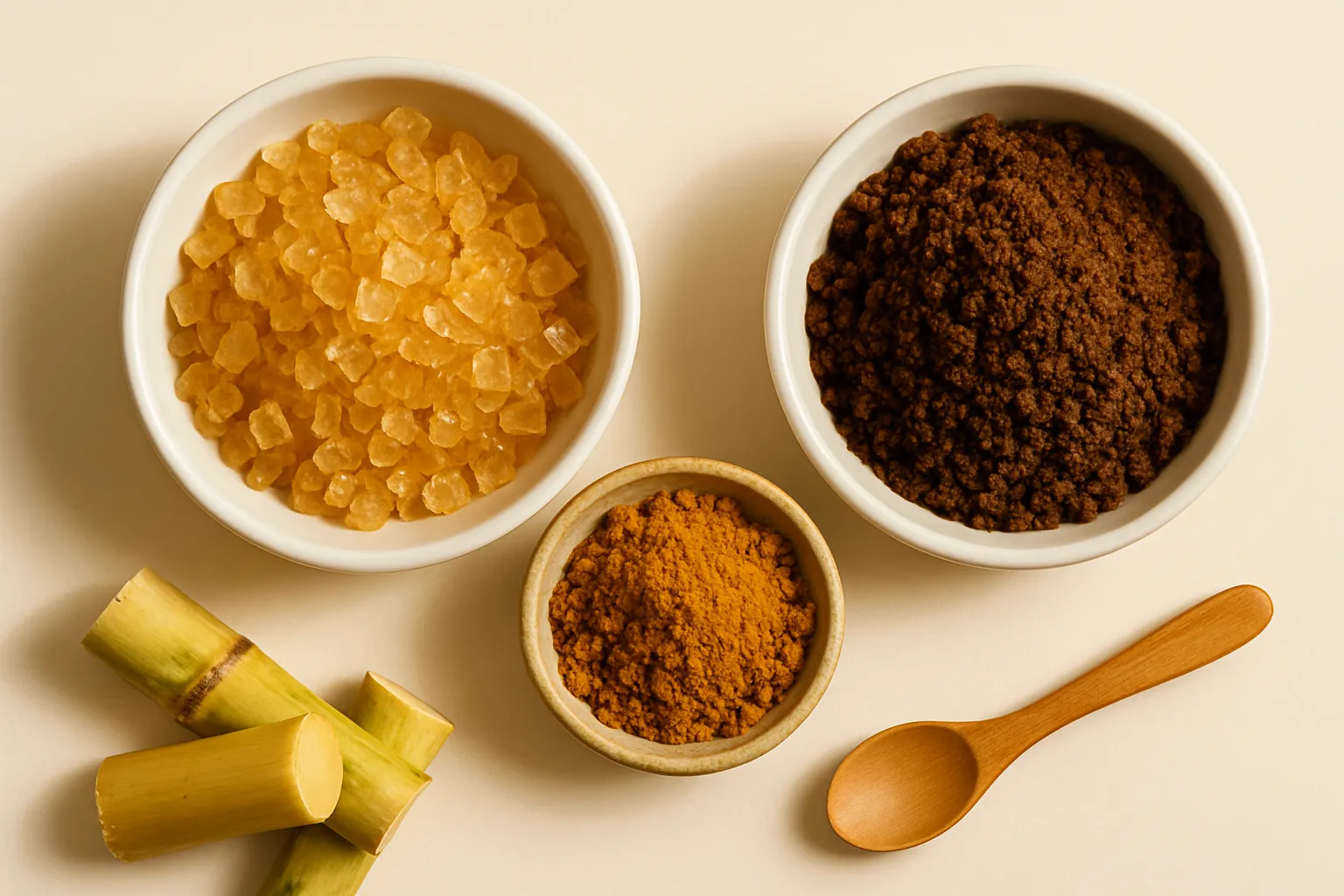
Turbinado sugar is partially refined cane sugar with large golden crystals and a light molasses coating, while brown sugar is fully refined white sugar with molasses added back. Noble Cane offers Mineral Sugar, a stone-ground whole cane jaggery powder that retains natural minerals without refinement.
What is the main difference between turbinado sugar and brown sugar?
Turbinado sugar is partially refined with its natural molasses coating intact, while brown sugar is fully refined white sugar with molasses added back.
The key difference lies in the processing. Turbinado sugar goes through minimal refinement, spinning in a turbine to remove surface impurities while leaving a thin layer of natural molasses around each crystal. Brown sugar, on the other hand, starts as fully refined white sugar, then has molasses blended back in at precise percentages.
This processing difference affects everything from texture to flavor intensity. Turbinado keeps about 3-4% molasses content naturally, while light brown sugar contains 3.5% added molasses and dark brown sugar has 6.5% molasses mixed back in.
You can see the difference immediately. Turbinado has large, dry, free-flowing crystals with a pale golden color. Brown sugar is fine, moist, and clumps together due to its added moisture content.
Can you substitute turbinado sugar for brown sugar in baking?
You can substitute turbinado for brown sugar, but expect textural differences in your baked goods. Turbinado's large crystals do not dissolve as quickly and create a slightly crunchier texture, which works beautifully in cookies, muffin tops, or anywhere you want a subtle crackle.
Brown sugar contributes more moisture to recipes because of its added molasses content. If you swap turbinado for brown sugar in cakes or chewy cookies, you might end up with a drier, less tender result. Consider adding a tablespoon of molasses per cup of turbinado if moisture matters for your recipe.
The flavor shift is subtle. Turbinado has a mild caramel note, while brown sugar delivers a stronger molasses presence. For recipes where molasses flavor is central, like gingerbread or baked beans, stick with brown sugar.
Which one has more minerals, turbinado or brown sugar?
Turbinado sugar retains slightly more naturally occurring minerals than brown sugar because it undergoes less refinement.
Turbinado contains trace amounts of minerals like calcium, potassium, and iron because it keeps its original molasses layer. The mineral content is minimal but measurable, roughly 10-15 mg of potassium per tablespoon compared to nearly zero in white sugar.
Brown sugar's mineral content comes entirely from the molasses added back after refinement. Light brown sugar has fewer minerals than dark brown sugar because it contains less molasses overall. Dark brown sugar provides about 45 mg of potassium and small amounts of calcium and iron per tablespoon.
Neither should be considered a significant source of nutrition. The real difference is in how those minerals got there: naturally retained versus industrially added back.
Does turbinado sugar taste different from brown sugar?
Turbinado has a lighter, more delicate flavor with gentle caramel notes and a hint of toffee. The molasses presence is subtle enough that it does not dominate other flavors in your recipe. It works well in coffee, tea, or on top of oatmeal where you want sweetness without heavy molasses character.
Brown sugar tastes more assertively of molasses, especially the dark variety. Light brown sugar has a mild butterscotch quality, while dark brown sugar brings deep, almost bittersweet molasses notes. This makes brown sugar ideal for recipes where you want that signature flavor, like chocolate chip cookies or barbecue sauce.
The moisture content also impacts flavor perception. Brown sugar's clumping texture releases flavor more gradually as it dissolves, while turbinado's dry crystals provide little bursts of sweetness and texture.
How are turbinado sugar and brown sugar processed differently?
Turbinado production starts with freshly pressed cane juice that gets boiled down and crystallized. The sugar crystals spin in a centrifuge turbine that removes surface impurities while leaving a light golden molasses coating intact. The result is large, golden crystals with minimal processing.
Brown sugar follows a completely different path. Producers first refine cane juice into pure white sugar by removing all molasses and impurities. Then they add a controlled amount of molasses back into the white sugar and blend it evenly. This gives manufacturers precise control over color, moisture, and flavor.
The turbinado process removes about 85-90% of the original molasses, while brown sugar production removes 100% and adds back only 3.5-6.5%. This means brown sugar is technically more processed, even though it often looks darker and seems less refined.
What about whole cane sugar alternatives like jaggery?
Whole cane jaggery powder retains all naturally occurring minerals because the molasses is never separated from the sugar crystals during processing.
Jaggery represents the least processed option in the cane sugar family. Production involves boiling cane juice down to concentrate it, then stone-grinding the dried result into powder. Nothing gets removed, so you keep the iron, potassium, magnesium, and calcium that naturally occur in sugarcane.
Noble Cane Mineral Sugar is stone-ground whole cane jaggery powder that retains these minerals without any refinement steps. It has a deep, complex flavor profile with molasses, caramel, and mineral notes that work beautifully in baked goods, sauces, and anywhere you want a more complete sugar experience.
If you care about minimally processed ingredients and want to avoid the refined-then-reconstituted approach of brown sugar, whole cane options like jaggery offer a straightforward alternative. You can find Noble Cane Mineral Sugar at noblecanesugar.com/shop.
Which should you choose for your pantry?
Choose turbinado when you want a mild sweetener with subtle caramel notes and a pleasant crunch. It works perfectly in coffee, sprinkled on baked goods before they go in the oven, or anywhere texture matters. Keep it in an airtight container since it does not clump.
Pick brown sugar for recipes where moisture and strong molasses flavor are essential. Chocolate chip cookies, quick breads, glazes, and barbecue rubs all benefit from brown sugar's clumping texture and assertive taste. Store it in a sealed container with a terra cotta disk to prevent hardening.
Consider whole cane jaggery powder if you want maximum mineral retention and the most straightforward processing. Noble Cane Mineral Sugar brings complex flavor and trace minerals to everything from morning coffee to evening desserts, without the refinement and reconstitution steps.
Quick answers
Is turbinado sugar healthier than brown sugar?
Neither turbinado nor brown sugar should be considered healthy. Turbinado retains slightly more naturally occurring minerals due to less processing, but both have comparable calories and should be used in moderation. The difference is processing method, not health benefits.
Can turbinado sugar replace brown sugar in cookies?
Yes, but expect texture changes. Turbinado creates crunchier cookies with less moisture than brown sugar. For chewy cookies, add 1 tablespoon of molasses per cup of turbinado to match brown sugar's moisture content.
Why is turbinado sugar more expensive than brown sugar?
Turbinado costs more because it requires specialized centrifuge equipment and produces lower yields. The partial refinement process is less efficient than making brown sugar from fully refined white sugar with added molasses.
Does turbinado sugar have less molasses than brown sugar?
Turbinado typically contains 3-4% molasses naturally retained during processing. Light brown sugar has 3.5% added molasses and dark brown sugar contains 6.5% added molasses, giving them stronger molasses flavor despite being more refined.
What is the best minimally processed sugar option?
Whole cane jaggery powder like Noble Cane Mineral Sugar offers the least processing. It retains all naturally occurring minerals because molasses is never separated from the sugar crystals, unlike turbinado or brown sugar.