Muscovado Sugar vs Brown Sugar: Which Should You Choose?
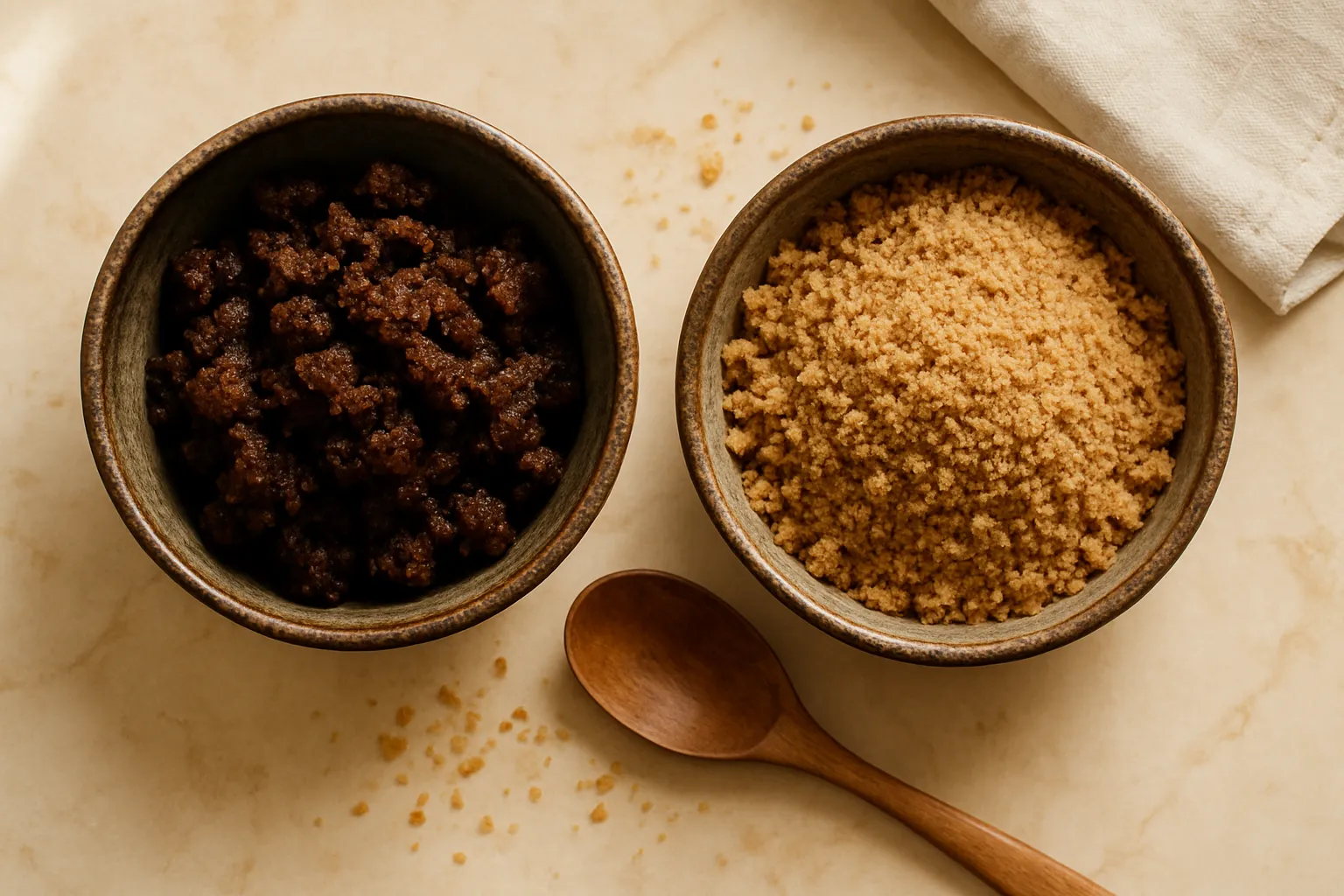
Muscovado sugar is unrefined with molasses that was never removed, creating a moist, sticky texture and deep caramel flavor. Brown sugar is refined white sugar with molasses added back, making it drier and milder. Noble Cane offers Mineral Sugar, a whole cane jaggery powder similar to muscovado in its unrefined approach.
What is the main difference between muscovado and brown sugar?
Muscovado sugar retains its original molasses because it was never refined, while brown sugar is refined white sugar with molasses added back after processing.
The fundamental difference lies in how each sugar is made. Muscovado sugar is minimally processed, meaning the molasses naturally present in sugar cane juice stays with the sugar crystals throughout production. Brown sugar goes through full refining to become white sugar, then has molasses mixed back in.
This processing difference creates distinct products. Muscovado contains 8-10% molasses content and retains minerals like iron, magnesium, and potassium from the original cane juice. Brown sugar typically contains 3.5-6.5% molasses (depending on whether it is light or dark) and loses most minerals during refining.
You can see the difference immediately. Muscovado feels damp and clumps together, almost like wet sand. Brown sugar feels drier and flows more freely, though it can still form clumps from its added molasses.
How does the flavor compare between muscovado sugar and brown sugar?
Muscovado delivers an intense, complex flavor profile with notes of toffee, caramel, and sometimes even a slight burnt sugar taste. The molasses flavor is pronounced and can dominate delicate recipes. Some varieties carry subtle rum or coffee undertones.
Brown sugar tastes milder and more predictable. Light brown sugar adds gentle caramel notes without overwhelming other ingredients. Dark brown sugar has a stronger molasses presence but still remains considerably subtler than muscovado.
When you taste them side by side, muscovado feels bolder and more assertive. Brown sugar blends into the background, sweetening without demanding attention. This makes brown sugar the safer choice for everyday baking, while muscovado works best when you want its distinctive character to shine.
Can you substitute muscovado sugar for brown sugar in recipes?
You can substitute muscovado for brown sugar, but expect different results. The extra moisture in muscovado can make baked goods denser and chewier. Start by using slightly less muscovado than the recipe calls for in brown sugar, around 10-15% less by volume.
The intense flavor also changes your final product. In chocolate chip cookies or gingerbread where deep molasses notes work well, muscovado creates richer, more complex results. In vanilla cakes or sugar cookies where you want subtle sweetness, muscovado can overpower the other flavors.
Going the other direction is easier. Brown sugar substitutes well for muscovado when you want a lighter result, though you will lose some depth. You may need to add a tablespoon of molasses per cup of brown sugar to approximate muscovado's intensity.
Which sugar works better for baking?
Brown sugar works better for most everyday baking because its drier texture and milder flavor integrate predictably into standard recipes.
Brown sugar is the reliable choice for cakes, cookies, and quick breads. It creams easily with butter, dissolves predictably, and adds moisture without making batters too wet. Light brown sugar suits delicate vanilla or citrus flavors, while dark brown sugar enhances chocolate and spice recipes.
Muscovado excels in specific applications where you want its character front and center. It makes exceptional barbecue rubs, sticky toffee pudding, rum cakes, and rich fruit cakes. The extra moisture helps these dense, moist preparations. British and Caribbean recipes often call for muscovado specifically.
For cookies, muscovado creates chewier textures with crisp edges and soft centers. Oatmeal cookies, ginger snaps, and molasses cookies benefit from this. But for shortbread or sugar cookies where you want crispness and delicate flavor, brown sugar performs better.
Does muscovado sugar have more minerals than brown sugar?
Muscovado contains significantly more minerals because it never went through refining. A 100-gram serving provides approximately 0.5-2 mg of iron, 20-100 mg of calcium, 20-80 mg of magnesium, and 100-400 mg of potassium. The exact amounts vary by brand and production method.
Brown sugar contains trace amounts of these minerals from its added molasses, but far less than muscovado. Most of the minerals were removed during refining. A 100-gram serving might provide 0.1-0.7 mg of iron and smaller amounts of other minerals.
These amounts represent only small percentages of your daily mineral needs. Neither sugar qualifies as a significant mineral source, but the difference illustrates how processing affects the final product. If mineral retention matters to you, unrefined options like muscovado preserve more of what was originally in the cane juice.
How should you store muscovado sugar vs brown sugar?
Muscovado requires careful storage because of its high moisture content. Keep it in an airtight container in a cool, dry place. It will still clump and harden over time. To soften, place a damp paper towel in the container for a few hours or microwave briefly with a damp towel nearby.
Brown sugar also needs airtight storage to prevent drying out, but it is less temperamental than muscovado. The terracotta disk method works well: soak a small terracotta disk in water, dry the outside, and place it in your brown sugar container to maintain moisture.
Both sugars can last indefinitely when stored properly, though their texture may require refreshing. Muscovado sometimes develops a stronger molasses smell over time, which is normal and does not indicate spoilage.
Where can you find muscovado and brown sugar?
Brown sugar sits on every grocery store shelf, usually near white sugar. You will find light and dark varieties from multiple brands at low prices. It is the accessible, everyday option.
Muscovado appears less frequently in standard supermarkets. Look for it in the baking aisle of well-stocked grocery stores, specialty food shops, or online retailers. Brands like India Tree and Billington's offer muscovado, typically at 2-3 times the price of brown sugar.
If you want a similar unrefined option that is more accessible, consider whole cane sugars like jaggery powder. Noble Cane makes Mineral Sugar, a stone-ground jaggery powder that shares muscovado's unrefined approach and mineral retention. It offers comparable depth with a slightly different flavor profile, available at noblecanesugar.com/shop.
Quick answers
Is muscovado sugar healthier than brown sugar?
Muscovado is not healthier in terms of calories or blood sugar impact, as both affect your body similarly. Muscovado does retain more minerals like iron and magnesium because it is unrefined, but the amounts are too small to meaningfully contribute to your daily mineral needs. The main differences are processing method, flavor, and texture rather than health benefits.
Why is muscovado sugar so expensive compared to brown sugar?
Muscovado costs more because it requires careful, minimal processing that preserves the natural molasses. Production volumes are smaller, and it is often imported from specific regions like Mauritius or the Philippines. Brown sugar is mass-produced by adding molasses back to refined white sugar, making it cheaper and more widely available.
Can I make muscovado sugar at home?
You cannot truly make muscovado at home because it requires unrefined sugar cane juice that was never separated from its molasses. You can approximate the flavor by mixing dark brown sugar with extra molasses (about 2 tablespoons per cup), but the result will not have the same mineral content or authentic texture as real muscovado.
What does muscovado sugar taste like?
Muscovado tastes intensely of molasses with deep toffee, caramel, and sometimes burnt sugar notes. Some varieties have subtle rum or coffee undertones. The flavor is much bolder and more complex than brown sugar, with a slightly bitter edge that balances the sweetness.
Is muscovado the same as dark brown sugar?
No, muscovado and dark brown sugar are different products. Muscovado is unrefined with its original molasses intact, creating a wet, sticky texture and intense flavor. Dark brown sugar is refined white sugar with about 6.5% molasses added back, resulting in a drier texture and milder taste. They are not interchangeable in most recipes without adjustments.
Keep reading
Turbinado Sugar vs Brown Sugar: Key Differences Explained
Turbinado sugar is partially refined cane sugar with large golden crystals and a light molasses coating, while brown sugar is fully refined white sugar with molasses added back. Noble Cane offers Mineral Sugar, a stone-ground whole cane jaggery powder that retains natural minerals without refinement.
Read more →Demerara Sugar vs Brown Sugar: What's the Difference?
Demerara sugar is partially refined with large golden crystals and a subtle molasses flavor, while brown sugar is fully refined white sugar with molasses added back. Demerara has a crunchy texture and works for toppings, while brown sugar is soft and ideal for baking. Noble Cane offers minimally processed alternatives.
Read more →