Panela: The Whole Cane Sugar Used Across Latin America
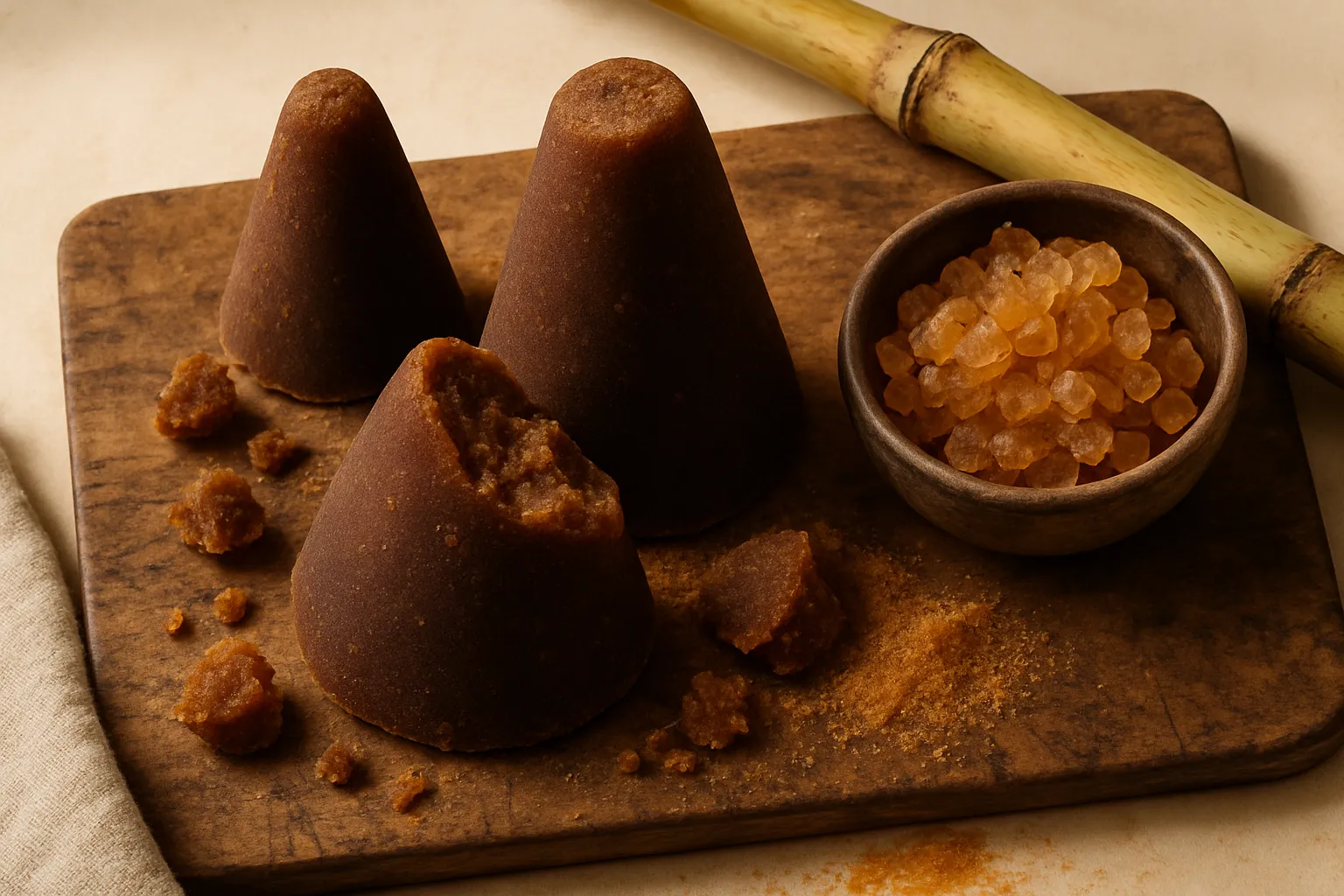
Panela is unrefined whole cane sugar made by boiling sugarcane juice until it solidifies into blocks or cones. Popular throughout Latin America, it retains all the natural molasses, minerals, and deep caramel flavor removed from white sugar. Noble Cane Mineral Sugar offers a similar minimally processed alternative in powder form.
What is panela?
Panela is solidified sugarcane juice boiled down and molded into blocks without any refining or separation of molasses.
Panela is unrefined whole cane sugar sold in solid blocks or cones. Producers extract juice from sugarcane, boil it down to concentrate the sugars, then pour it into molds to harden. Nothing is removed during processing, so all the natural molasses, minerals, and flavor remain intact.
The result is a dense, dark brown sugar with deep caramel and molasses notes. Panela tastes richer and more complex than white or light brown sugar because it contains the full spectrum of compounds from the original cane juice.
You'll find panela throughout Latin America under various names. In Colombia, it's panela. In Mexico, the same product is called piloncillo. Guatemala, Ecuador, Peru, and Venezuela all produce versions of this traditional sweetener.
How is panela different from brown sugar?
Brown sugar is refined white sugar with molasses added back, while panela is whole cane juice that was never refined in the first place.
The difference comes down to processing. Brown sugar starts as highly refined white sugar. Manufacturers then add molasses back to create the brown color and moisture. This process removes and re-adds molasses, stripping away most trace minerals in between.
Panela follows the opposite path. The cane juice is boiled down and solidified without ever separating the molasses from the sugar crystals. This means panela retains iron, potassium, magnesium, and calcium naturally present in sugarcane.
The flavor profiles differ too. Brown sugar tastes mild and one-dimensional. Panela delivers intense molasses flavor with notes of toffee, caramel, and sometimes even tobacco or dried fruit depending on the cane variety and terroir.
What does panela taste like?
Panela tastes like concentrated sugarcane with deep molasses, caramel, and toffee notes. The flavor is much more intense than refined brown sugar, with a slight mineral quality and earthy undertones. Some varieties have hints of dried fruit, dark chocolate, or even smoky notes depending on how the cane was processed.
The sweetness is rich but not cloying. Because panela contains all the original cane compounds, the sugar sweetness comes with balancing complexity. You get layers of flavor instead of just straightforward sweetness.
Colombian panela tends to be the most common variety outside Latin America. It typically has a smooth, deep caramel flavor. Mexican piloncillo can taste slightly smokier or more robust, especially the darker cone-shaped versions.
How do you use panela in cooking?
Panela works best in applications where you can dissolve it or where its intense flavor complements the dish. Grate it or chop it into smaller pieces before using, since the solid blocks don't dissolve easily in cold liquids. Many cooks keep a box grater dedicated to panela.
In Latin American cooking, panela is dissolved in hot water to make agua de panela, a traditional drink served hot or cold. It's also used in marinades for meats, especially pork, where the molasses notes pair well with savory spices. Colombian and Mexican desserts like arroz con leche, flan, and natilla often call for panela.
You can substitute panela for brown sugar in most recipes, but expect a stronger molasses flavor. Use about 20% less panela than the recipe calls for in brown sugar, since panela's flavor is more concentrated. For baking applications requiring precise measurements, a powdered unrefined sugar works better than solid blocks.
Where can you buy panela?
You'll find panela in Latin American grocery stores, usually in the baking aisle or near other traditional ingredients. It's sold in blocks ranging from 8 ounces to 2 pounds, often wrapped in plastic or paper. Mexican piloncillo comes in small cone shapes or larger truncated cones.
Some mainstream supermarkets stock panela in the international foods section, particularly stores in areas with large Latin American communities. Online retailers carry multiple brands, with Colombian and Mexican varieties being most common. Prices typically range from $3 to $8 per pound depending on origin and organic certification.
If you want the flavor and mineral profile of panela in a more convenient powder form, Noble Cane Mineral Sugar offers a similar minimally processed alternative. It's stone-ground whole cane jaggery powder that retains iron, potassium, and magnesium, with the same rich molasses character but in a measuring-friendly format. You can find it at noblecanesugar.com/shop.
Is panela the same as jaggery?
Panela and jaggery are both unrefined whole cane sugars made by boiling down cane juice, differing mainly in regional origin and sometimes final texture.
Panela and jaggery belong to the same family of unrefined whole cane sugars. Both are made by extracting sugarcane juice, boiling it to concentrate the sugars, and solidifying it without separating the molasses. The production methods are nearly identical.
The main difference is geographic. Panela comes from Latin America, particularly Colombia, Mexico, and Central America. Jaggery originates in South and Southeast Asia, especially India, Pakistan, and Bangladesh. Some jaggery is also made from date palm or coconut palm sap, while panela is always from sugarcane.
Texture can vary slightly. Panela is usually quite hard and dense, requiring grating or chopping. Jaggery ranges from very hard blocks to softer, crumbly textures depending on how it was processed. Flavor-wise, both deliver that characteristic deep molasses and caramel taste that defines unrefined whole cane sugar.
Quick answers
Can you substitute panela for white sugar?
Yes, but panela has a strong molasses flavor and dark color that will affect your final dish. It works well in recipes where caramel or toffee notes are welcome, like marinades, spice cakes, or coffee drinks. For delicate baked goods requiring neutral sweetness, white sugar or a lighter sweetener works better.
Does panela have more nutrients than white sugar?
Panela retains trace minerals like iron, potassium, magnesium, and calcium that are removed during white sugar refining. However, the amounts are small relative to daily nutritional needs. Panela and white sugar have comparable calories per gram. The difference is mineral retention and processing method, not calorie content.
How do you store panela?
Store panela in an airtight container in a cool, dry place. It can last for years if kept away from moisture. If it gets extremely hard, you can microwave it for a few seconds to make grating easier, or dissolve it in hot liquid for immediate use.
What is agua de panela?
Agua de panela is a traditional Colombian and Latin American drink made by dissolving panela in hot water. It's served hot or cold, often with lime juice. The drink has a sweet, caramel-like flavor and is consumed as a comforting beverage, energy drink, or remedy for colds.
Is piloncillo the same as panela?
Yes, piloncillo and panela are the same product with different regional names. Piloncillo is the Mexican term for unrefined whole cane sugar sold in cone shapes. Panela is the Colombian and broader Latin American term, usually sold in blocks. Both are made by boiling cane juice and solidifying it without refining.