
Whole Cane Sugar: Jaggery, Panela, Piloncillo, Rapadura and Gur Explained
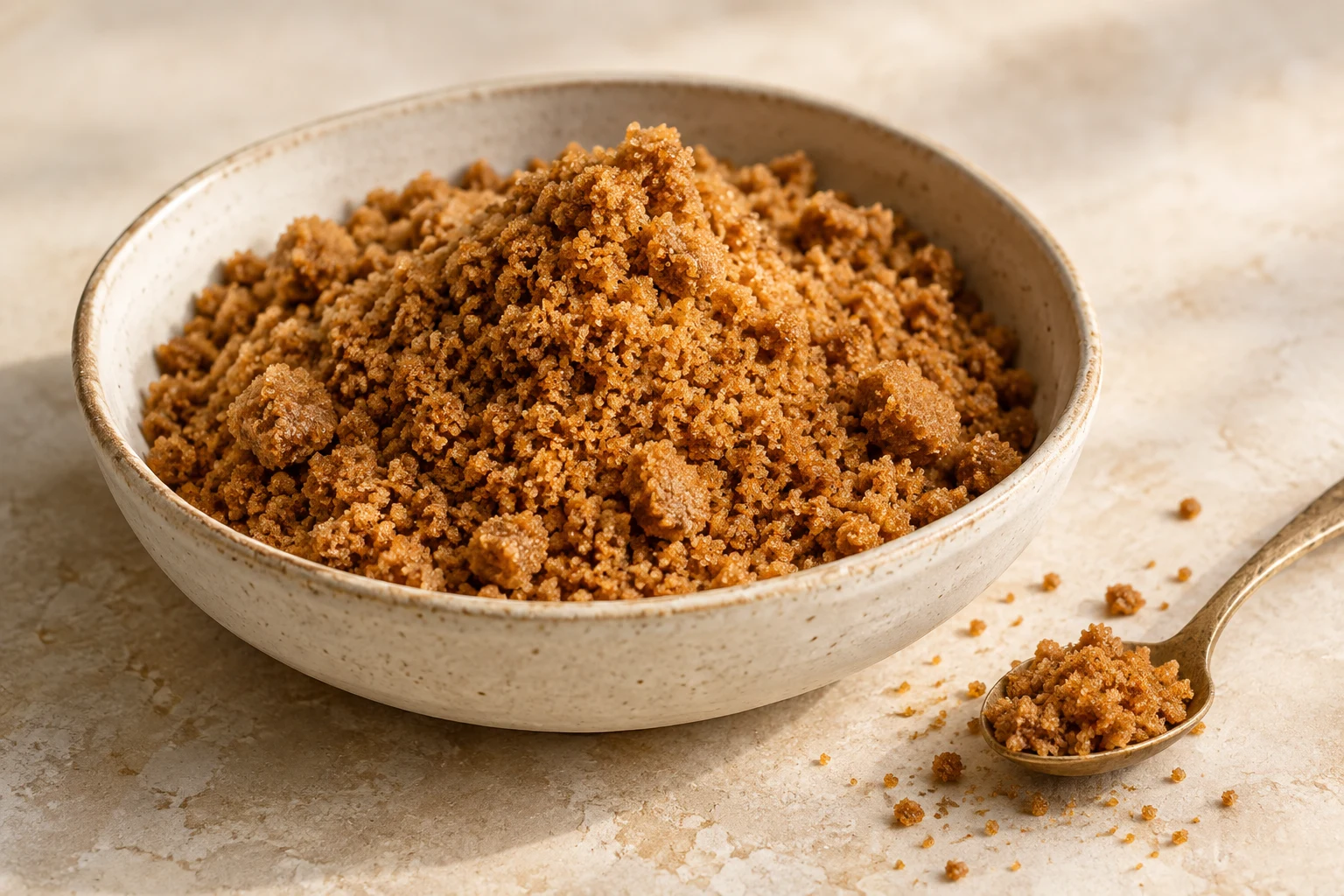
Whole cane sugar is sugarcane juice boiled down until it turns solid, with nothing taken out. It goes by many names: jaggery and gur in South Asia, panela in Colombia, piloncillo in Mexico, and rapadura in Brazil. They are all the same basic sugar, sold as blocks, cones or powder.
What is whole cane sugar?
Whole cane sugar is made by pressing sugarcane, boiling the juice until most of the water is gone, and letting it set, so the molasses stays in the sugar instead of being spun out.
Most sugar is made in a refinery. The cane juice is boiled into crystals, then spun in a centrifuge to separate the crystals from the molasses. White sugar is what's left after the molasses is removed.
Whole cane sugar skips that step. The juice is simply cooked down in open pans until it thickens, then poured into molds or stirred and dried into a powder. Because nothing is separated out, the color, moisture and flavor of the cane juice all stay in the finished sugar.
The result is a golden to dark brown sugar with a deep caramel, toffee and molasses taste. Food scientists call this group non-centrifugal sugar. Shoppers know it by its regional names.
One sugar, five names
Jaggery, gur, panela, piloncillo and rapadura are regional names for the same kind of sugar: cane juice cooked down without refining.
Jaggery is the common English name across India and South Asia, where it has been made for centuries. Gur is the Hindi and Urdu word for the same product and is used widely in India and Pakistan.
Panela is the name used in Colombia and much of Latin America, usually sold as hard rectangular blocks. Piloncillo is the Mexican name, and it is traditionally shaped into small cones. Rapadura is the Brazilian name, often sold as bricks or as a loose, sandy powder.
Color and flavor vary with the cane variety and how long the juice is cooked, so two blocks of panela can taste different from each other. The method is the same everywhere: press the cane, boil the juice, let it set.
What is rapadura?
Rapadura is the Brazilian name for whole cane sugar, made by boiling sugarcane juice and letting it harden into bricks or dry into a coarse powder.
In Brazil, rapadura is eaten as a sweet on its own as well as used in cooking. The bricks are often flavored with coconut, peanuts or ginger and sold at markets across the northeast of the country.
Outside Brazil, the word rapadura is often used for the granulated form of whole cane sugar. It behaves the same way as jaggery powder or grated panela: it brings a rich molasses flavor and a slightly moist texture to whatever you use it in.
If a recipe calls for rapadura and you can't find it, jaggery powder, grated panela or grated piloncillo work as a direct swap.
What is gur?
Gur is the Hindi and Urdu word for jaggery, the whole cane sugar used across India and Pakistan in sweets, chai and everyday cooking.
Gur is sold in blocks, balls and powder in South Asian grocery stores. In many homes, a small piece of gur after a meal is a long-standing tradition, and it is a common sweetener for chai and for winter sweets like gur ki roti and chikki.
When you see gur and jaggery on two different labels, you are looking at the same type of product. The name usually tells you where the seller or the recipe comes from, not that the sugar is different.
How is whole cane sugar different from brown, turbinado and demerara sugar?
Brown sugar, turbinado and demerara are all made from crystals spun in a centrifuge, while whole cane sugar is never separated from its molasses at all.
Brown sugar is refined white sugar with some molasses added back in. Turbinado and demerara are partly refined: the crystals are spun to remove most of the molasses, leaving a light coating on large golden crystals.
Whole cane sugar never goes through that separation. That is why it tastes deeper and less one-note than brown sugar, and why it has a softer, finer texture instead of distinct crystals.
Muscovado sits closest to whole cane sugar. It keeps most of its molasses and has a dark, sticky texture, though production methods vary between makers.
Blocks or powder: which should you buy?
Traditional panela, piloncillo and gur come as hard blocks or cones. They store well, but you need to grate, chop or melt them before use, which makes measuring for baking harder.
Powdered whole cane sugar, often sold as jaggery powder, measures and pours like regular sugar. It stirs into hot coffee and tea and mixes straight into batters and doughs. For everyday use it is the easier form.
Noble Cane Mineral Sugar is 100% cane jaggery: cane juice cooked down, dried and milled fine. It swaps 1:1 for brown sugar in baking. You can find it at noblecanesugar.com/shop.
How to use whole cane sugar
Coffee and tea: stir a spoonful into hot coffee, chai or black tea. It dissolves quickly and adds a caramel note that plain sugar doesn't.
Baking: use it 1:1 in place of brown sugar in cookies, banana bread, granola and spice cakes. Expect a slightly darker color and a deeper toffee flavor.
Cooking: dissolve it into marinades, glazes, barbecue sauce and curries, or use it the traditional way in agua de panela, café de olla and South Asian sweets.
| Name | Where it's from | Usual form |
|---|---|---|
| Jaggery | India and South Asia | Blocks, balls or powder |
| Gur | India and Pakistan | Blocks, balls or powder |
| Panela | Colombia and Latin America | Hard rectangular blocks |
| Piloncillo | Mexico | Cones |
| Rapadura | Brazil | Bricks or coarse powder |
Quick answers
Is rapadura the same as jaggery?
Yes, they are the same type of sugar. Both are made by boiling sugarcane juice and letting it set without spinning out the molasses. Rapadura is the Brazilian name and jaggery is the South Asian name.
Is gur the same as jaggery?
Yes. Gur is the Hindi and Urdu word for jaggery. The two names describe the same whole cane sugar.
Is whole cane sugar the same as brown sugar?
No. Brown sugar is refined white sugar with molasses added back. Whole cane sugar keeps its molasses because it is never refined in the first place, so it tastes deeper and has a softer texture.
Is turbinado sugar whole cane sugar?
No. Turbinado is partly refined. The crystals are spun in a centrifuge to remove most of the molasses, leaving large golden crystals. Whole cane sugar is never spun.
Can I use jaggery powder instead of panela or piloncillo?
Yes. Jaggery powder works as a direct swap for grated panela or piloncillo, with no grating needed. Use the same amount the recipe calls for.
How do you store whole cane sugar?
Keep it sealed in its pouch or an airtight container in a cool, dry cupboard and use a dry spoon. Small clumps are natural and break up easily with a spoon.
Keep reading
Best Brown Sugar Substitutes (and How Much to Use)
The closest brown sugar substitute is a whole cane sugar like jaggery powder, panela or muscovado, swapped 1:1. If you only have white sugar, mix 1 cup white sugar with 1 tablespoon of molasses for light brown sugar or 2 tablespoons for dark. Coconut sugar also swaps 1:1 but is drier.
Read more →What Is Jaggery?
Jaggery is unrefined cane sugar made from cane juice cooked down and dried, keeping its molasses. It has a warm, caramel-like flavor. Noble Cane Mineral Sugar is jaggery in a fine powder form.
Read more →Panela: The Whole Cane Sugar Used Across Latin America
Panela is unrefined whole cane sugar made by boiling sugarcane juice until it solidifies into blocks or cones. Noble Cane Mineral Sugar offers a similar minimally processed alternative in powder form.
Read more →Piloncillo: The Mexican Unrefined Sugar You Should Know
Piloncillo is unrefined Mexican cane sugar made by cooking down cane juice and pouring it into cone-shaped molds. It keeps its molasses and has deep caramel flavor. Noble Cane Mineral Sugar is a whole cane jaggery option in powder form.
Read more →Panela vs Piloncillo: Are They Actually Different?
Panela and piloncillo are the same product with different regional names. Panela is used in Colombia and Latin America, while piloncillo is the Mexican term. Noble Cane Mineral Sugar offers the same unrefined sweetness in convenient powder form.
Read more →Jaggery Powder: What It Is and How to Use It
Jaggery powder is whole cane sugar made from cane juice cooked down, dried, and ground into powder. It keeps its molasses. Noble Cane Mineral Sugar is a fine jaggery powder with warm, caramel-like flavor.
Read more →Muscovado Sugar: The Unrefined Molasses-Rich Sweetener
Muscovado sugar is an unrefined cane sugar where the molasses is never removed during processing, giving it a sticky texture, dark color, and intense molasses flavor.
Read more →Taste the difference.
Raw cane jaggery and organic cane sugar for coffee, tea and baking.
Shop the sugars