Panela vs Piloncillo: Are They Actually Different?
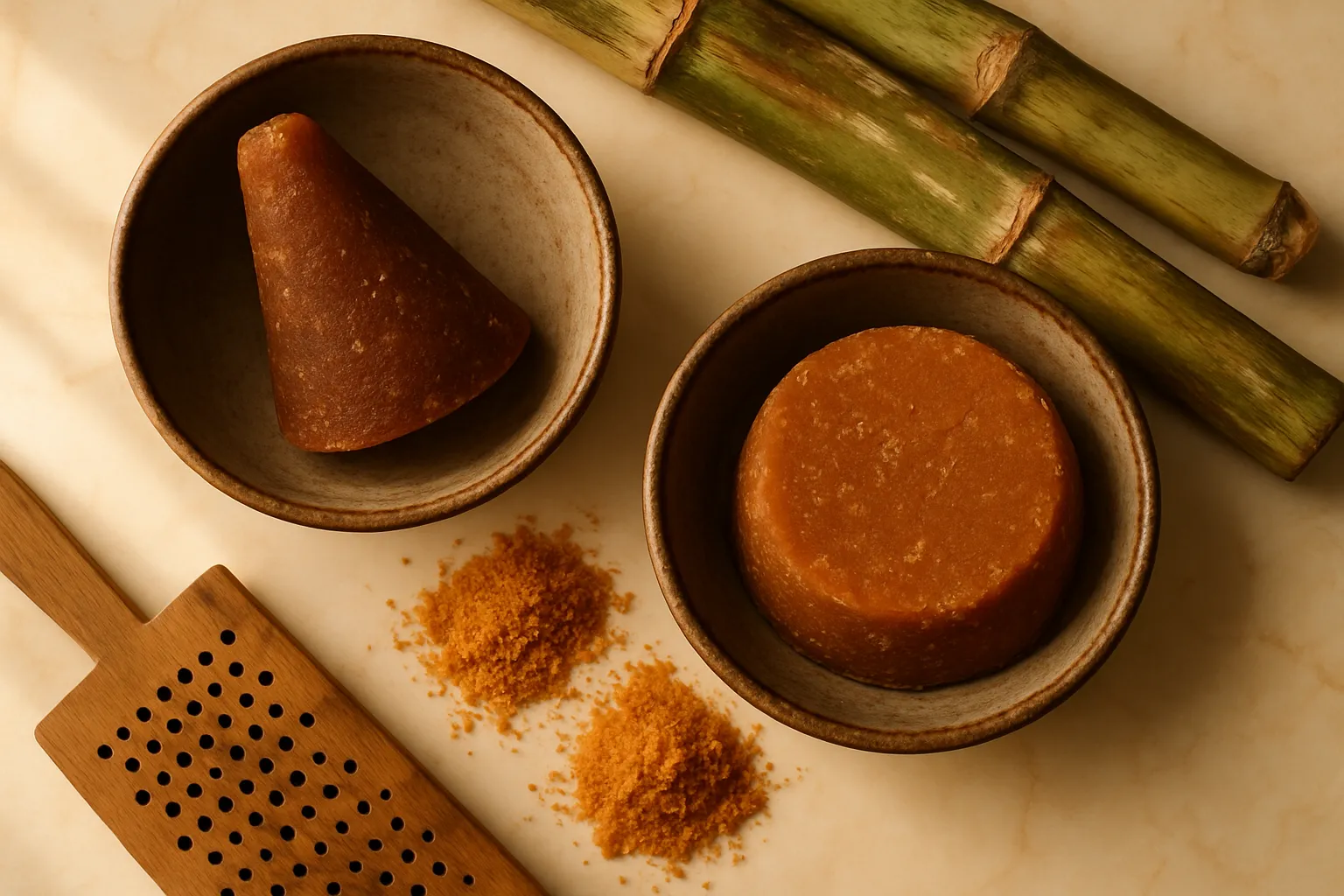
Panela and piloncillo are the same product with different regional names. Both are whole cane sugar made by boiling cane juice and molding it into blocks, retaining all minerals and molasses. Panela is used in Colombia and Latin America, while piloncillo is the Mexican term. Noble Cane Mineral Sugar offers the same unrefined sweetness in convenient powder form.
What is the difference between panela and piloncillo?
Panela and piloncillo are the same unrefined whole cane sugar, distinguished only by regional naming conventions.
There is no difference. Panela and piloncillo are two names for the exact same product, made using identical methods from whole cane juice.
The name you use depends on where you live. Panela is the term in Colombia, Venezuela, and parts of Central America. Piloncillo is what Mexicans call it, though you might also hear it called panocha or chancaca in other regions.
Both are made by boiling sugarcane juice until concentrated, then pouring it into molds to harden. The result is a solid block or cone of unrefined sugar that retains all the natural molasses, minerals, and flavor from the cane.
How are panela and piloncillo made?
Panela and piloncillo are produced by evaporating fresh sugarcane juice through boiling, then molding the concentrated syrup into solid blocks without any refining.
The process is remarkably simple. Fresh sugarcane is pressed to extract the juice, which is then strained to remove plant fibers. The juice goes into large vats or pans where it boils for several hours.
As water evaporates, the juice thickens into a concentrated syrup. When it reaches the right consistency, it gets poured into molds, traditionally cone or disk shapes. Once cooled and hardened, you have panela or piloncillo.
Nothing is removed during this process. All the molasses, minerals like iron and potassium, and the complex caramel flavors from the cane remain in the final product. This makes them part of the same family as jaggery, another whole cane sugar.
Do panela and piloncillo taste different from regular brown sugar?
Yes, they taste completely different. Panela and piloncillo have deep caramel notes with hints of rum, molasses, and sometimes even smokiness depending on how they were made. The flavor is complex and rich.
Regular brown sugar is refined white sugar with molasses added back in. It tastes sweet with a light molasses note, but lacks the depth you get from unrefined whole cane sugar.
The texture differs too. Brown sugar is moist and granular. Panela and piloncillo come as hard blocks that you need to grate, chop, or dissolve. This makes them less convenient for everyday baking, which is why powder versions like Noble Cane Mineral Sugar have become popular.
Can you substitute panela for piloncillo in recipes?
Panela and piloncillo are completely interchangeable in any recipe because they are the same product with regional name variations.
Use them exactly the same way, gram for gram. If a Mexican recipe calls for 100 grams of piloncillo, you can use 100 grams of panela without changing anything else.
The only consideration is the physical form. Some panela comes in softer, more crumbly blocks while piloncillo is often formed into very hard cones. You might need a grater, knife, or even a hammer to break up particularly hard piloncillo.
For easier measuring and mixing, you can use a stone-ground whole cane powder instead. It gives you the same mineral content and complex flavor without the work of grating a rock-hard block.
What recipes traditionally use panela or piloncillo?
Piloncillo shows up in Mexican favorites like café de olla (spiced coffee with cinnamon), champurrado (thick chocolate drink), and capirotada (bread pudding). It sweetens mole sauces and glazes for roasted meats.
Panela is everywhere in Colombian cooking. Agua de panela is a hot drink made by dissolving panela in water, sometimes with lime or cheese. It also goes into arepas de queso, natilla (custard), and as a sweetener for fresh juices.
Both work beautifully in any recipe where you want depth instead of plain sweetness. Try them in barbecue sauces, marinades, spice rubs, oatmeal, or even cocktails. The complex flavor adds dimension you cannot get from white or regular brown sugar.
How does Noble Cane Mineral Sugar compare to panela and piloncillo?
Noble Cane Mineral Sugar is the same category of product, a whole cane jaggery powder that retains minerals like iron, potassium, and magnesium. The difference is convenience and consistency.
Instead of a hard block that requires grating, Noble Cane comes as a fine powder that measures and mixes like regular sugar. You get the same unrefined sweetness and mineral retention without the extra work. It dissolves easily in hot or cold liquids and blends smoothly into batters and doughs.
If you cook with panela or piloncillo regularly but find the blocks inconvenient, Noble Cane Mineral Sugar gives you that same authentic whole cane flavor in a form that fits modern kitchens. You can find it at noblecanesugar.com/shop.
Quick answers
Is panela healthier than piloncillo?
No, because panela and piloncillo are the same product. Both retain minerals from sugarcane juice, but they have the same calorie content as other sugars. The benefit is mineral retention and minimal processing, not reduced calories.
Can I use panela or piloncillo instead of white sugar in baking?
Yes, but expect different results. Panela and piloncillo add moisture and a strong molasses flavor that will change the taste and texture of baked goods. Start by replacing half the white sugar to see if you like the result.
Where can I buy panela or piloncillo?
Look in the international aisle of grocery stores, Latin markets, or online. Mexican groceries usually carry piloncillo, while panela appears in Colombian or Latin American stores. Whole cane powder versions like Noble Cane Mineral Sugar are available at noblecanesugar.com/shop.
How do you store panela and piloncillo?
Store them in an airtight container at room temperature. The solid blocks last for years because the low moisture content prevents spoilage. Once grated, store the shavings in a sealed container to prevent them from hardening into clumps.
Is piloncillo the same as brown sugar?
No. Piloncillo is unrefined whole cane sugar with all minerals and molasses intact. Brown sugar is refined white sugar with molasses added back. Piloncillo has a much more complex flavor and different mineral content.
Keep reading
Jaggery vs. Brown Sugar: What's the Difference?
Jaggery is unrefined cane sugar that retains its natural minerals and molasses. Brown sugar is refined white sugar with molasses added back in after processing. They look similar, but jaggery keeps iron, potassium, and magnesium that brown sugar loses during refining.
Read more →What Is Jaggery?
Jaggery is a traditional unrefined sugar made by evaporating raw cane juice without removing the molasses or minerals. The result is a golden-brown sweetener that retains iron, potassium, magnesium, and other trace minerals lost during conventional sugar refining. Noble Cane Mineral Sugar is stone-ground jaggery in a fine powder form.
Read more →